Sharad Purnima 2026: Date, Kojagari Lakshmi Puja, Kheer Under Moonbeams & Meaning
By Naam Jaap Editorial Team · July 22, 2026 · Reviewed August 11, 2026 · 5 min read
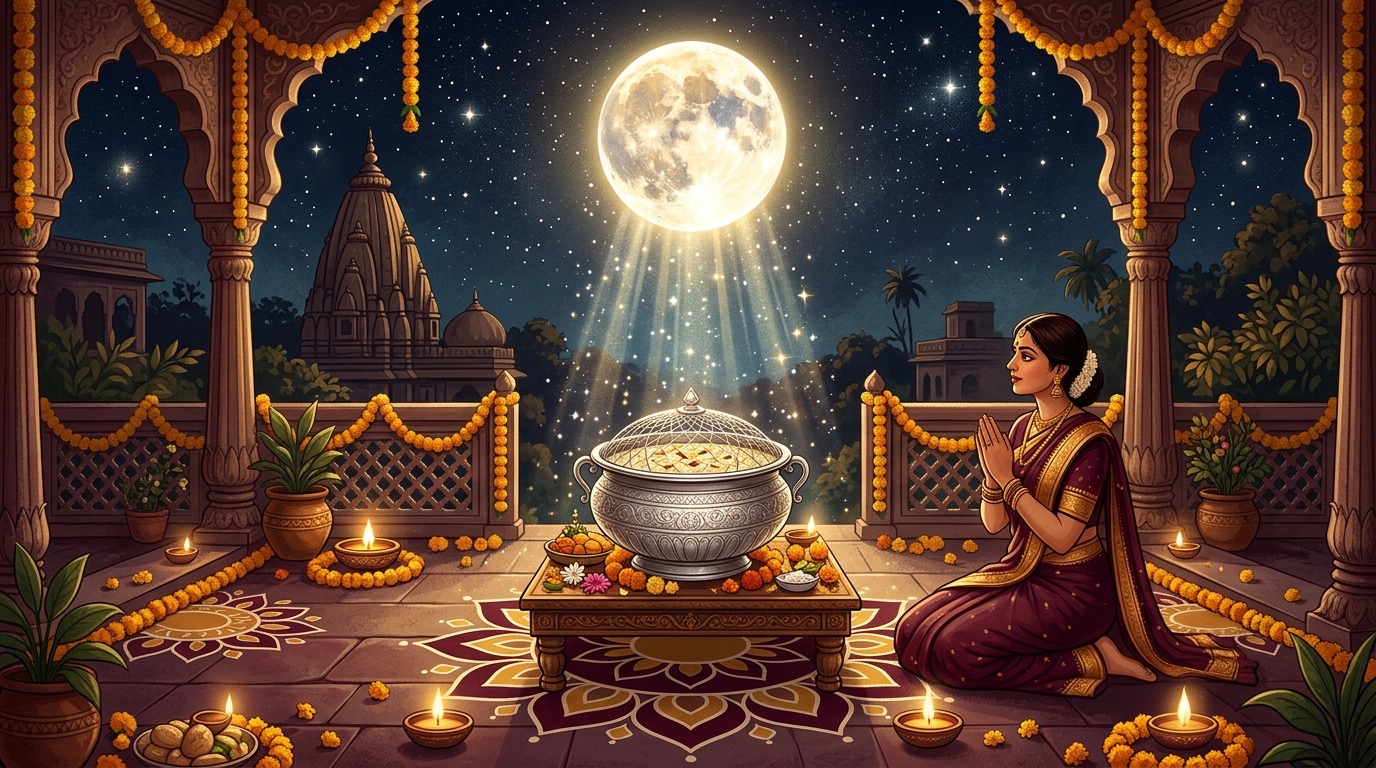
Of the twelve full-moon nights in the Hindu calendar, there is one when the moon is said to shine at its fullest and softest, radiating all sixteen kalas (complete artistic rays). That night is Sharad Purnima — also called Kojagari Purnima or Raas Purnima. Falling in the autumn month of Ashwin, it marks the end of the monsoon and the arrival of crisp, clear nights. In 2026, Sharad Purnima falls on Sunday, 25 October.
Across India it is celebrated in beautifully different ways. In Bengal, Odisha and Assam it is Kojagari Lakshmi Puja, when Goddess Lakshmi is worshipped at midnight as she walks the earth asking "Ko jagarti?" — "Who is awake?". In Gujarat and Maharashtra, people gather under the moonlight and share sweet rice kheer. In Vrindavan and Mathura it is remembered as the night of Krishna's Maha Raas with the gopis.
Why Sharad Purnima is considered special
In the Vedic tradition the moon governs the mind, the emotions and water. On Sharad Purnima the full moon rises in a clear autumn sky, and scriptures describe its light as amrit vrishti — a cooling "rain of nectar" that soothes the body and mind after the heat of the year. Three threads of meaning come together on this night:
- The vigil of Lakshmi (Kojagari). Lakshmi is said to visit every home; those who stay awake in prayer, song or study are blessed with clarity, health and honest prosperity.
- The Maha Raas of Krishna. In Vrindavan, Krishna's flute called the gopis into a timeless dance of selfless love — an image of the soul's longing to merge with the divine.
- Cooling, restful energy. In Ayurveda, the autumn moon is traditionally associated with a cooling, calming quality.
Kheer under the midnight moon
The most loved tradition of Sharad Purnima is preparing rice kheer and leaving it out under the open moonlight overnight. Here is the simple ritual:
- Cook a satvik kheer in the evening — whole milk, basmati rice, a little sugar, cardamom and saffron.
- Cover it with a thin muslin cloth or clean sieve, so moonlight filters through while dust and insects are kept out.
- Place it under the open sky — a balcony, terrace or courtyard where direct moonlight falls, roughly from 10 pm to midnight.
- Share it as prasad after the midnight prayers or the next morning.
Traditionally, the cool night air and moonlight are believed to turn the milk-and-saffron kheer into a gentle, cooling tonic after the warmth of the season. Treat it as a cherished custom rather than a medical remedy — and if anyone in the family has dietary sensitivities, use your judgement about leaving dairy out overnight.
Kojagari Lakshmi Puja vidhi at home
In eastern and central India, Kojagari Lakshmi Puja is performed late in the evening or at midnight. Unlike the quieter Diwali Lakshmi Puja, this one celebrates abundance, hospitality and a joyful household.
- Set the altar. Clean the space, draw an alpona or rangoli near the entrance, and seat an image of Lakshmi on a red cloth.
- Offer lotus flowers, coconut, betel leaves, fruits, sweets and a bowl of fresh kheer.
- Light the lamps. Light several ghee diyas around the home and keep the main doorway lit through the night.
- Chant the Lakshmi Stotram or Om Shreem Mahalakshmyai Namah 108 times on a mala.
- Keep a gentle vigil (jagaran) — a few quiet hours of bhajans, reading or meditation instead of sleeping early.
Bringing Sharad Purnima into modern life
In a hurried, screen-lit routine, this night is a rare invitation to slow down and reconnect with the sky:
- Step away from screens by around 9 pm and simply sit under the moon for twenty minutes.
- Try a little moonlight gazing. Softly resting your eyes on the full moon is a gentle, calming version of trataka after a day of screens.
- Reflect on what already feels complete — looking at the whole, round moon, give thanks for health, family and a steady practice.
Sharad Purnima leads into the festival season that follows — Karwa Chauth just days later and Diwali in November. Confirm the exact moonrise and muhurat for your own city using a live Panchang.
Related reading
- Diwali 2026: date, Lakshmi Puja muhurat and the five days
- Karwa Chauth 2026: date, moonrise and vrat
- Trataka: candle (and moonlight) gazing meditation
- Today's Panchang and moonrise for your city
Get festival dates & muhurat for your city
Check the exact date, tithi and shubh muhurat for your city with the free Naam Jaap Panchang.
Open the Panchang