
Balarama Jayanti 2026 (Hal Chhath): Date, Farmers' Festival & Lahi Chhath Rules
By Naam Jaap Editorial Team · August 3, 2026 · 4 min read
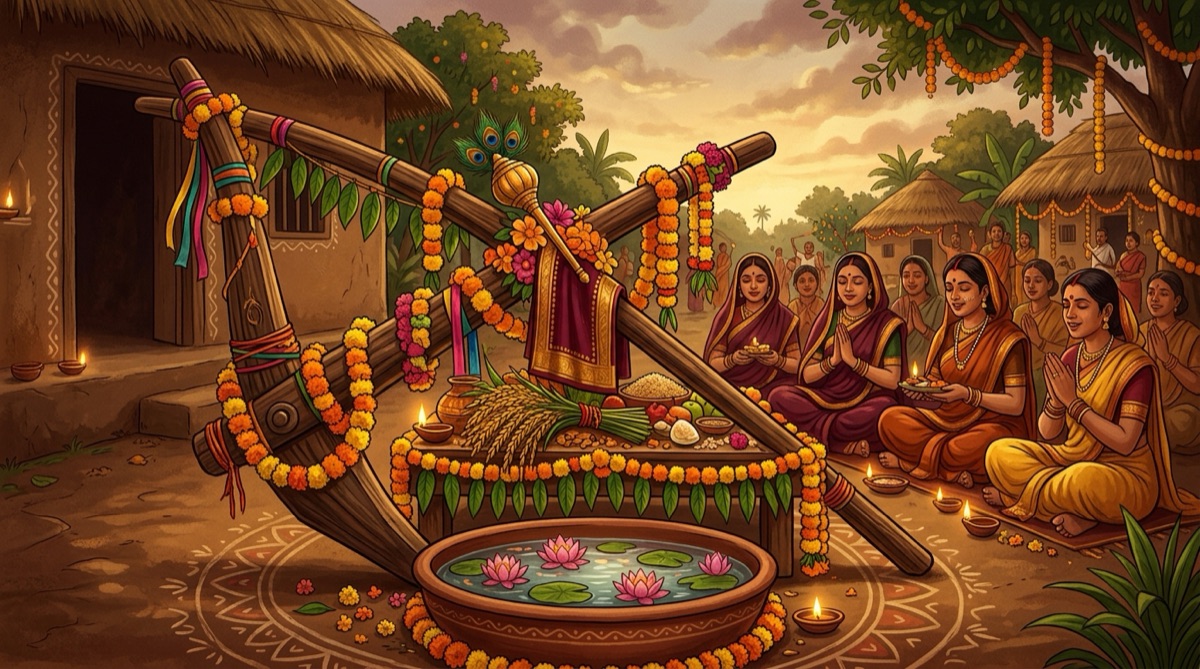
Two days before the grand celebration of Krishna Janmashtami, a deeply cherished and unique festival is celebrated across rural and urban India to honor Lord Krishna’s elder brother: Lord Balarama.
This day is celebrated as Balarama Jayanti—also known as Hal Chhath, Hal Shashti, Har Chhath, or Lahi Chhath.
Falling on the Shashti Tithi (sixth day) of the Krishna Paksha in the month of Bhadrapada, Hal Chhath is a vibrant celebration of agriculture, physical strength, maternal love, and eco-gratitude. Lord Balarama’s primary weapon was not a sword or mace, but a plough (Hal) and a pestle (Musala), symbolizing the sacred duty of tilling the earth, growing food, and protecting farmers.
In 2026, Balarama Jayanti will be celebrated on Thursday, 3 September 2026 (or early September depending on local city Panchang Tithi).
On this day, mothers observe a special fast praying for the long life, health, and prosperity of their children, adhering to unique culinary traditions that honor unploughed wild foods.
Unique Fasting Rules: The Honor of Unploughed Food
The most fascinating aspect of Hal Chhath is its strict dietary rule designed to honor the farm plough (Hal):
The Hal Chhath Food Rules:
- No Ploughed Grains: Mothers keeping the fast do NOT consume any grain or vegetable that has been grown using a farmer's plough (such as regular wheat, rice, or farmed vegetables).
- Wild & Unploughed Foods Allowed: Instead, women eat Tini Rice (wild uncultivated rice / Pasai ke Chawal), Mahua leaves, wild berries, and vegetables that grow naturally without tilling the soil.
- Buffalo Milk Only: Cow milk and cow ghee are strictly avoided on this specific day to allow cows and oxen to rest. Only buffalo milk, curd, and buffalo ghee are consumed.
This ancient rule reflects profound ecological awareness—giving farmed soil, draft animals, and crops a day of rest and reverence!
Hal Chhath Puja Vidhi at Home
- Creating the Symbolic Farm Pond: Women dig a small, symbolic square pit (Pokhar) in their courtyard or place a large clay dish filled with water.
- Placing Twigs: Branches of the Jharni (wild bush), Kash grass, and Neem are placed in the symbolic pond.
- Plough & Balarama Worship: Draw a symbol of a plough using turmeric and kumkum. Worship Lord Balarama and Lord Krishna with wild rice (Tini rice), Mahua flowers, roasted chana, and curd.
- Maternal Blessings: Mothers apply six dots of turmeric and soot (Kajal) to their children's foreheads, praying for their protection and long life.
Frequently asked questions
Who was Lord Balarama in Vedic scriptures? Lord Balarama is considered an incarnation of Adishesha (the thousand-headed divine serpent upon whom Lord Vishnu rests). He represents immense physical strength, loyalty, protection, and agricultural abundance.
Can mothers who do not live in rural areas celebrate Hal Chhath? Yes! Women living in urban apartments celebrate by creating a small symbolic pond in a metal or clay tray on their balcony, using wild rice (Pasai rice) bought from local markets, and offering quiet prayers for their children.
Related reading
Get festival dates & muhurat for your city
Check the exact date, tithi and shubh muhurat for your city with the free Naam Jaap Panchang.
Open the Panchang