Dhanteras 2026: Date, Puja Muhurat, What to Buy and the Real Meaning
By Naam Jaap Editorial Team · July 22, 2026 · 5 min read
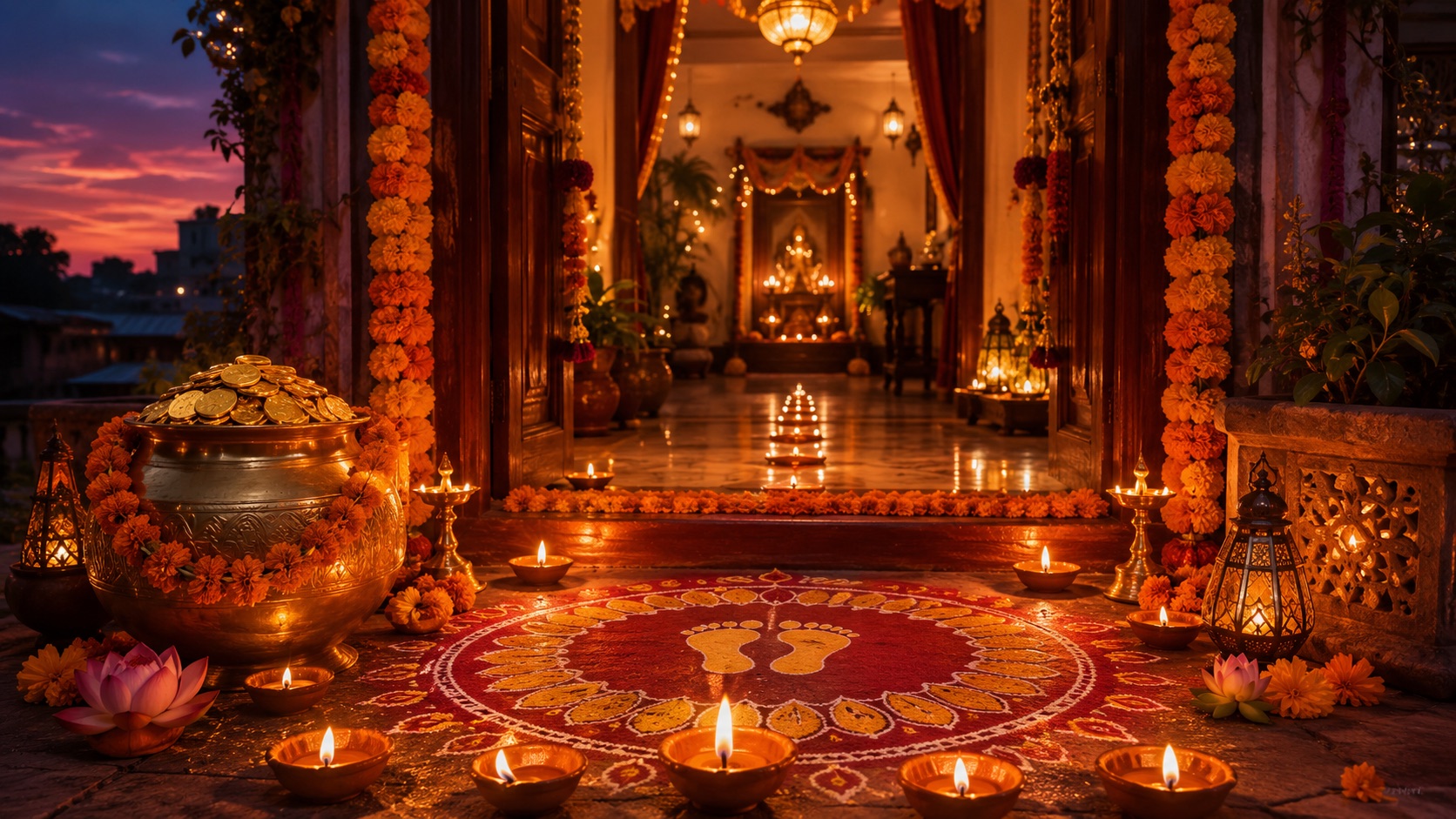
Dhanteras is the day the festival of lights truly begins. Two days before the main Diwali celebration, homes are cleaned and lit, new vessels and gold are brought in, and Goddess Lakshmi and Lord Dhanvantari are welcomed with lamps and prayer. In 2026, Dhanteras falls on Friday, 6 November. This guide covers the date, the puja muhurat, what to buy, the rituals, and — most importantly — what Dhanteras actually means beneath the shopping.
Dhanteras 2026 date
Dhanteras 2026 is on Friday, 6 November 2026. It marks the thirteenth day (Trayodashi) of the Krishna Paksha in the month of Kartik, opening the five-day Diwali festival:
- Dhanteras — Friday, 6 November 2026
- Naraka Chaturdashi (Choti Diwali) — Saturday, 7 November 2026
- Diwali / Lakshmi Puja — Sunday, 8 November 2026
- Govardhan Puja — Monday, 9 November 2026
- Bhai Dooj — Tuesday, 10 November 2026
The word Dhanteras combines dhan (wealth) and teras (the thirteenth day). It is also known as Dhanatrayodashi and, in the medical and Ayurvedic tradition, as Dhanvantari Trayodashi.
Dhanteras 2026 puja muhurat
The Dhanteras Lakshmi puja is performed in the evening during the Pradosh Kaal — the roughly two-hour window after sunset — which on 6 November 2026 falls broadly in the early evening. Within it, the Sthir Lagna (fixed ascendant, usually Vrishabha/Taurus) is considered the most auspicious slot for lighting the lamp and worshipping Lakshmi.
Because sunset and these windows shift from city to city, the exact muhurat for Delhi differs from Mumbai, Kolkata or Chennai by many minutes. Always confirm the precise Dhanteras puja muhurat for your own city using a live Panchang before you begin. As a general rule, light your lamp at dusk and complete the main puja within the Pradosh period.
What to buy on Dhanteras
Buying something new on Dhanteras is considered auspicious — a symbol of inviting prosperity into the home. Traditional purchases include:
- Metal vessels — brass, copper or steel utensils are the oldest and most classic Dhanteras buy.
- Gold and silver — coins, jewellery or small items, often stamped with Lakshmi and Ganesha.
- A broom (jhadu) — humble but meaningful, associated with sweeping in cleanliness and Lakshmi.
- Dhania (coriander seeds) — sown after the festival in some regions as a symbol of growth.
- New lamps and diyas — for the days of light ahead.
A gentle reminder: the spirit of Dhanteras is gratitude and welcome, not pressure to spend. A single new diya or a small brass item, bought within your means, carries the same blessing as anything expensive. Lakshmi is said to favour a clean, content home over an indebted one.
Dhanteras puja vidhi — a simple home guide
- Clean the home. Lakshmi is welcomed only where there is cleanliness and light, so tidy and wash the entrance especially.
- Make a rangoli at the doorway and draw small footprints leading inward, symbolising Lakshmi entering.
- Set up the puja with idols or images of Lakshmi, Ganesha and Dhanvantari, along with any new items and gold you have bought.
- Light a lamp at the main door and offer a diya to Yama, the lord of death, for protection of the household (the "Yama Deepam" tradition).
- Offer flowers, incense, sweets, kumkum and rice, and chant Lakshmi mantras such as Om Shreem Mahalakshmiyei Namah.
- Do aarti and distribute prasad to the family.
The meaning behind Dhanteras
Two beautiful stories sit behind this day. The first is the emergence of Dhanvantari, the physician of the gods, who rose from the churning of the cosmic ocean holding the pot of amrit (the nectar of immortality). This is why Dhanteras is also a day of health and healing, and the national Ayurveda day in India.
The second is the legend of Goddess Lakshmi, who is said to visit homes on this night, choosing the clean, lit and welcoming ones. The lamps at the door, the rangoli and the swept threshold are all invitations.
Read together, the two stories say something wise: true dhan — real wealth — is not only gold in a drawer. It is health, light, a clean and peaceful home, and a heart grateful enough to welcome good fortune. The vessels and coins are symbols; the substance is gratitude, care and generosity.
Celebrating Dhanteras mindfully
If you want the festival to mean something beyond shopping, try this: alongside anything you buy, give something away. Share sweets with a neighbour, give to someone in need, or simply forgive a small grudge. Lakshmi, the tradition teaches, does not stay where she is hoarded — she flows where she is shared. That is the quiet heart of Dhanteras.
Related reading
- Diwali 2026: date, Lakshmi Puja muhurat and the five days
- Ganesh Chaturthi 2026: date, puja and mantras
- Choghadiya today: good and bad muhurat times
- Dhanteras muhurat for your city
Get festival dates & muhurat for your city
Check the exact date, tithi and shubh muhurat for your city with the free Naam Jaap Panchang.
Open the Panchang