
Ganesh Chaturthi 2026: Date, Puja Muhurat, Sthapana Vidhi, Mantras and an Eco-Friendly Home Celebration
By Naam Jaap Editorial Team · July 6, 2026 · Reviewed July 14, 2026 · 10 min read
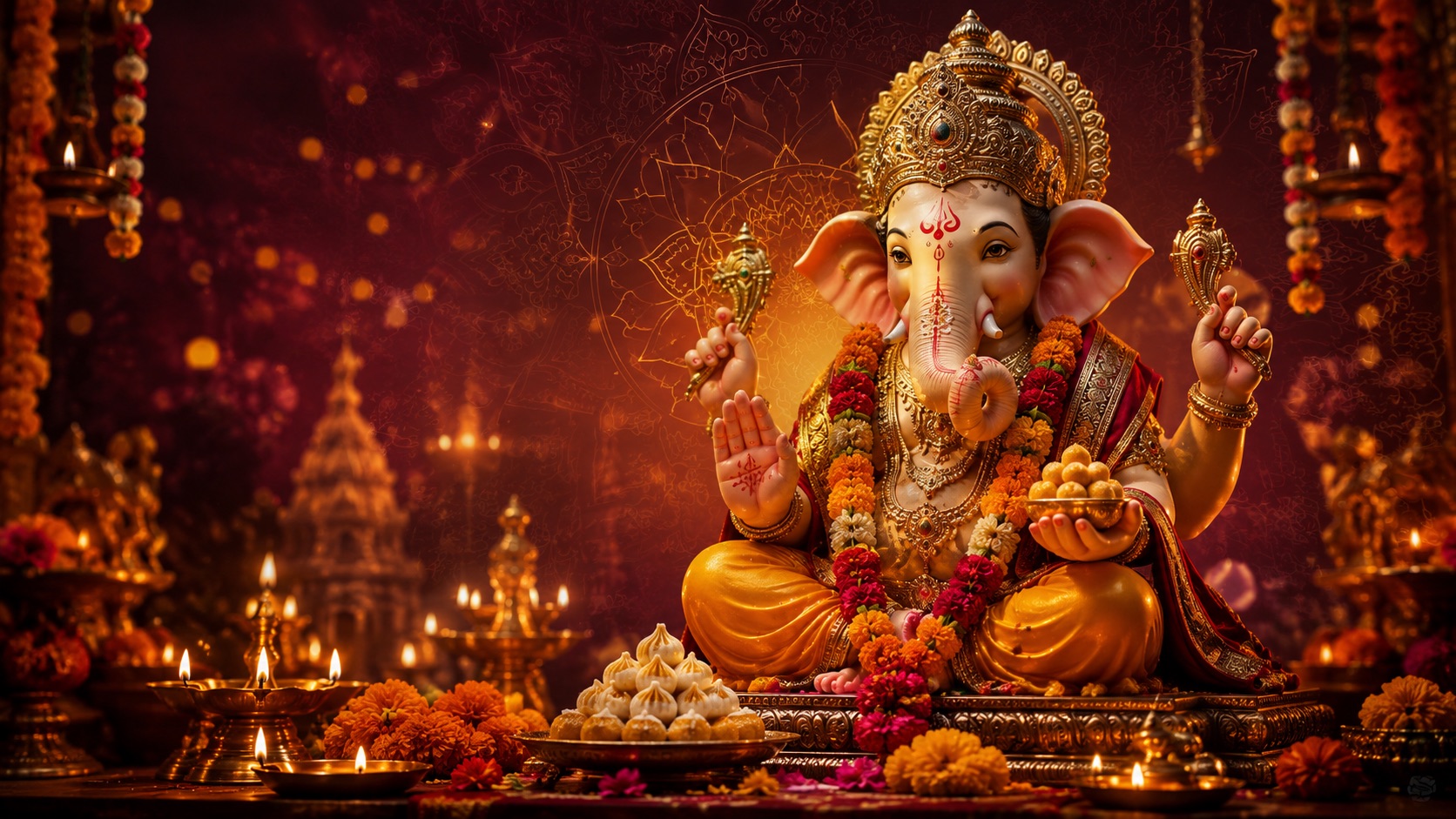
The first sound is often the drum. Then comes the call from the lane—“Ganpati Bappa Morya!”—and even people who were busy a moment ago turn toward it. A family carries Bappa home beneath an umbrella. Someone has made space on a bookshelf in a one-room flat. Somewhere else, artisans are adding the final gentle curve to a clay trunk. For a few days, the remover of obstacles becomes the most beloved guest in the house.
Ganesh Chaturthi in 2026 falls on Monday, 14 September. For New Delhi, the Madhyahna Ganesha Puja Muhurat is approximately 11:02 AM to 1:31 PM. Chaturthi Tithi begins around 7:06 AM on 14 September and ends around 7:44 AM on 15 September. Timings vary by location, so readers should check their city Panchang. Anant Chaturdashi and the traditional final visarjan fall on Friday, 25 September 2026.
Whether you welcome a murti for ten days, perform one simple morning puja, or visit a neighbourhood pandal, the festival begins with the same feeling: “Bappa, please come into our home and help us begin well.”
How Ganesha came to guard the door
One beloved story says that Goddess Parvati created a child from the paste or earth she used while bathing and breathed life into him. She asked him to guard the entrance and allow no one inside. When Shiva returned, the boy—who had never met him—faithfully blocked the way. A conflict followed, and in anger Shiva severed the boy's head.
Parvati's grief shook creation. Realising what had happened, Shiva promised to restore the child and instructed his attendants to bring the head of the first suitable being they encountered. They returned with an elephant's head. The child was revived as Ganesha, accepted as Shiva and Parvati's son, and blessed to be worshipped before other deities at the beginning of auspicious work.
The story is startling, as many sacred stories are. It contains obedience, misunderstanding, anger, loss, repair, and finally a new identity larger than the old one. Ganesha's elephant head is not a sign that nothing painful happened. It is a sign that life can be restored in a form nobody had planned.
Think of a time when your plan broke completely—a rejected application, a business that failed, a relationship that ended, a move you did not want. “Removing an obstacle” does not always mean returning life to the old shape. Sometimes grace gives you a new head: a new way of seeing, listening, and beginning.
Choosing a Ganesh murti
If you plan to perform visarjan, choose an unpainted natural clay or shadu-mati murti coloured with safe, natural materials. Avoid plaster of Paris, chemical paint, plastic decoration, and glitter. Ask the seller what the murti is made from; “eco-friendly” should describe the material, not merely appear on a label.
Choose a size you can lift, worship, and immerse safely. Bappa's blessing is not proportional to height. A small clay murti welcomed with attention can fill a home.
You may also keep a permanent metal, stone, or wooden Ganesha murti and perform symbolic visarjan with a betel nut, a small clay form, or a flower according to family tradition. If you are uncertain, ask a knowledgeable family elder or priest before the festival instead of improvising at the last minute.
Preparing the space and bringing Bappa home
Clean a stable, raised surface and cover it with a fresh cloth. Create a simple backdrop with reusable fabric, paper, flowers, banana leaves, or family artwork. Keep electrical lights away from water and do not overload sockets.
Before bringing the murti inside, some families perform a small welcome at the doorway with aarti, rice, and flowers. Carry Bappa respectfully and place the murti on the prepared seat. Try to finish decoration beforehand so you are not moving tools and boxes around the deity after sthapana.
Keep a kalash if it is part of your tradition, along with a diya, incense, water, sandalwood, kumkum, akshat, red flowers, durva grass, fruit, coconut, betel leaves and nuts, and bhog. Modak is the best-known offering, but homemade laddoo, fruit, or a small sweet is perfectly welcome.
A simple Ganpati sthapana and puja vidhi
Bathe and wear clean clothes. Sit facing the altar and calm your breathing. Begin with a sankalpa in plain language: “I welcome Shri Ganesha into this home. May there be wisdom in our decisions, humility in our success, and courage before obstacles.”
Light the diya. Purify the space symbolically by sprinkling clean water. Invoke Ganesha and request his presence in the murti. Detailed pran pratishtha is traditionally performed with a priest and specific mantras; a household beginner can offer a heartfelt avahana prayer without pretending to perform rites they have not learned.
Offer a seat, water, flowers, sandalwood, kumkum, akshat, durva, incense, light, and naivedya. Ganesha is traditionally offered durva in small bunches, often with an odd number of blades according to local custom. Offer red flowers and modak if available.
Chant “Om Gan Ganapataye Namah” 108 times, or begin with 11 or 21 repetitions. Recite Ganapati Atharvashirsha if it is part of your practice, sing “Jai Ganesh Deva,” or simply tell Bappa what you are carrying. End with aarti and distribute prasad.
Morning and evening, light a diya safely, offer fresh flowers or durva, chant, and perform aarti. Replace food offerings before they spoil, keep the area clean, and let the daily worship fit the rhythm of your household.
How long should Ganpati stay at home?
Families commonly keep Ganpati for one and a half, three, five, seven, or ten days. Some follow a fixed inherited custom. Choose the duration before sthapana based on what you can sustain respectfully. It is better to welcome Bappa for a shorter period with daily care than choose ten days and feel resentful or overwhelmed.
If work takes you away from home, ask another family member to continue the basic worship or choose a shorter stay. Devotion should create steadiness, not a logistical trap.
Why does Ganesha have an elephant head, large ears, and a mouse?
His large head reminds us to think broadly. His ears tell us to listen more than we speak. His small eyes suggest concentration. His curved trunk represents adaptability: it can uproot a tree or pick up a blade of grass. His large belly symbolises the ability to digest the pleasant and unpleasant experiences of life.
Then there is the mouse, often called Mushaka, his vahana. A mouse slips through tiny gaps and nibbles constantly, much like desire. When Ganesha rides the mouse, wisdom is seated above restless wanting. Desire is not denied; it is guided.
You can turn these symbols into a family conversation. At dinner, ask each person: Where do we need bigger listening? What small desire has been “nibbling” at our peace? Where can we become more adaptable? Suddenly, the murti is not only an object before us; it becomes a mirror.
Ganesha and the Mahabharata: the courage to continue
Tradition remembers Ganesha as the scribe who wrote the Mahabharata while sage Vyasa dictated it. Ganesha agreed on the condition that Vyasa would recite without pause. Vyasa asked in return that Ganesha understand each verse before writing it. When the writing instrument broke, Ganesha is said to have broken off his own tusk and continued.
This is why he is called Ekadanta, the one-tusked Lord. The story honours intelligence, but also commitment. When the pen breaks, do you abandon the work or find a new way to continue?
This does not mean glorifying burnout or harming yourself for productivity. The deeper lesson is resourcefulness joined with purpose. A student whose laptop fails can borrow notes and keep studying. A family whose decoration budget disappears can fold paper lotuses together. An obstacle may change the method without cancelling the intention.
About avoiding the moon on Ganesh Chaturthi
A traditional story connects Chaturthi moon sighting with false accusation and the Syamantaka jewel episode from Krishna's life. Many devotees avoid looking at the moon during the prescribed period on Ganesh Chaturthi. For New Delhi in 2026, the commonly listed avoidance window is roughly 9:06 AM to 8:04 PM, though city timings differ.
If you accidentally see the moon, do not panic. Traditions prescribe listening to the Syamantaka story and reciting related verses or prayers. The purpose of a festival is not to create obsessive fear. Follow your custom calmly and avoid alarming children with threats.
Eco-friendly visarjan that still feels sacred
Uttar puja is performed before departure, thanking Ganesha and requesting forgiveness for any mistakes in worship. The murti is gently moved, and the family sings and offers aarti. The farewell is emotional because hospitality has created relationship.
For a small natural-clay murti, home immersion in a clean bucket or tub can be a respectful option where local rules permit. Use enough water, allow the clay to dissolve naturally, and later return the settled earth to a garden or planter if the materials are safe. Do not pour glitter, plastic, chemical paint, or oily waste into soil or drains.
For larger murtis, use official community immersion tanks and follow municipal instructions. Remove plastic garlands, batteries, lights, and non-biodegradable decoration before immersion. Never enter deep or fast-moving water, and keep children away from crowded edges.
Some people worry that a home bucket feels less devotional than a river. Remember what you are protecting. Rivers are sacred precisely because they sustain life. An immersion that prevents pollution is not a lesser goodbye; it is an offering of responsibility.
Bringing the festival into daily life
Begin one delayed task. Ganesha is worshipped at beginnings. Choose the application, health appointment, savings plan, or difficult conversation you have postponed and take the first honest step.
Remove one obstacle for someone else. Help an elderly neighbour use an online service, mentor a student, make your workplace accessible, or listen without interrupting. Asking Ganesha to clear your path should make you more willing to clear another person's.
Practise generous hospitality. When people visit for darshan, keep refreshments simple and welcome warm. Do not let comparison over decoration turn a devotional visit into a status competition.
Keep noise compassionate. Music and drums are joyful, but babies, elderly people, animals, students, and patients share the neighbourhood. Follow local limits and timings. Bappa does not need someone else's distress as proof of your enthusiasm.
Common questions about Ganesh Chaturthi 2026
When is Ganesh Chaturthi in 2026? It falls on Monday, 14 September 2026.
What is the puja muhurat? For New Delhi, Madhyahna puja is approximately 11:02 AM to 1:31 PM. Timings differ by city.
Can I bring Ganpati home for only one day? Yes. Choose a duration supported by your tradition and circumstances, and perform sthapana and visarjan respectfully.
What if I cannot find durva or modak? Offer flowers, fruit, a homemade sweet, or a sincere mental offering. Do not let shopping anxiety replace prayer.
Can I reuse a permanent murti? A permanent murti is not immersed each year. Many families worship it and use a small temporary clay symbol for visarjan. Follow appropriate family or priestly guidance.
Which mantra is easiest for beginners? “Om Gan Ganapataye Namah” is simple and widely chanted. Repeat it slowly with attention.
Why do we say “Ganpati Bappa Morya, pudhchya varshi lavkar ya”? The Marathi call lovingly praises Bappa and asks him to return soon next year. It holds both farewell and anticipation in one breath.
When the time for visarjan comes, the altar suddenly looks empty. The flowers remain, perhaps a few grains of akshat remain, but the familiar form is gone. This is part of the teaching too. We welcome form, love it fully, and then let it return to earth. What remains is not the decoration. It is the quality Bappa awakened in the home.
May your listening become larger. May your attention become steadier. May your desires learn where to sit. And when the pen breaks in the middle of your important work, may you find the courage and imagination to continue.
Ganpati Bappa Morya!
Related reading
Get festival dates & muhurat for your city
Check the exact date, tithi and shubh muhurat for your city with the free Naam Jaap Panchang.
Open the Panchang