
Hartalika Teej 2026: Date, Clay Shiva-Parvati Puja Vidhi, Vrat Katha & Rules
By Naam Jaap Editorial Team · July 26, 2026 · 6 min read
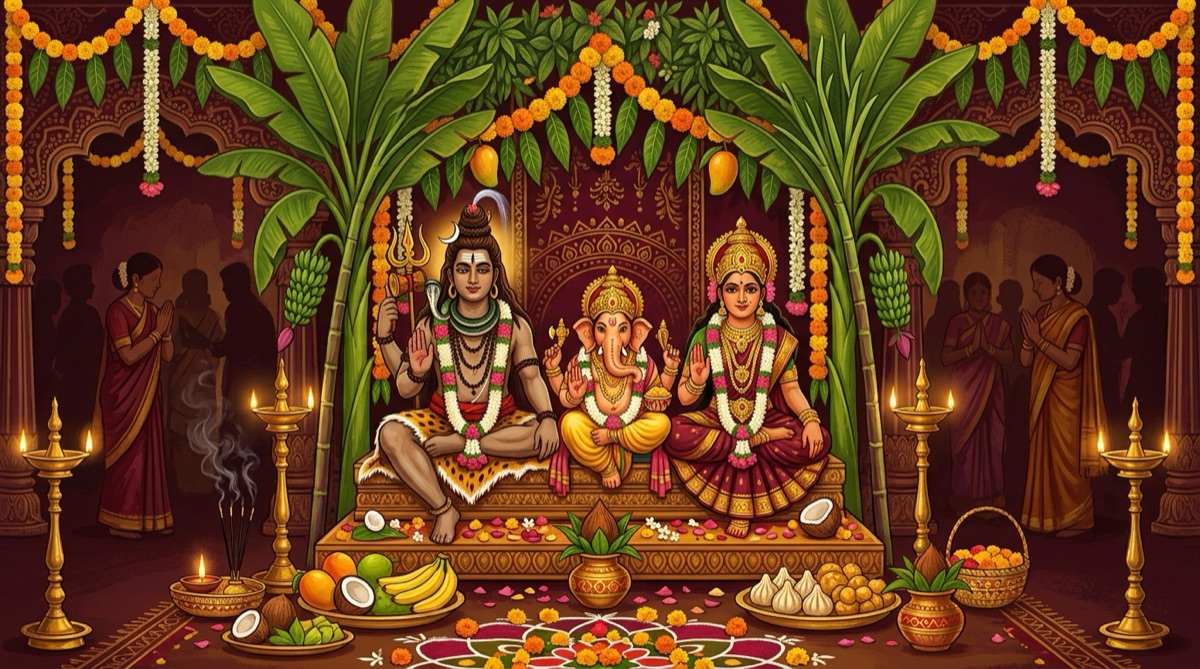
If there is one festival that represents the absolute peak of austerity, grace, and artistic devotion among Hindu women, it is Hartalika Teej.
Occurring on the Tritiya Tithi (third day) of the Shukla Paksha (bright fortnight) in the Hindu month of Bhadrapada, Hartalika Teej is celebrated with grand devotion across Maharashtra, Uttar Pradesh, Bihar, Jharkhand, Rajasthan, Madhya Pradesh, and Nepal.
Unlike other festivals where readymade idols or simple pictures are used, Hartalika Teej features a unique, hands-on artistic tradition: women hand-craft temporary idols of Lord Shiva, Goddess Parvati, and Lord Ganesha using natural river clay or eco-friendly soil, decorate them with vibrant colors and flowers, perform night-long prayers (Jagaran), and immerse the clay idols in water the following morning.
In 2026, Hartalika Teej will be observed on Monday, 14 September 2026 (with exact Tithi timing confirmed by your city's local Panchang).
Whether you are preparing for your first Hartalika Teej or seeking a clear guide to the clay idol creation, puja vidhi, and night vigil, this article covers every aspect of this sacred day.
The Origin Story: Why is it Called "Har-Talika"?
To understand the intense devotion behind this day, look at the Sanskrit breakdown of the word:
- Har means "abduction" or "taking away."
- Aalika means "female friend" or "companion."
According to the Lingapurana, Goddess Parvati (in her incarnation as Shailaputri) was deeply devoted to Lord Shiva from early childhood. However, her father, King Himavan, decided to arrange her marriage with Lord Vishnu upon the advice of Sage Narada.
Desperate to avoid marrying anyone other than Shiva, Parvati shared her heartache with her trusted female friend. Understanding her devotion, the friend secretly "abducted" Parvati into a dense, hidden jungle. Deep in the wilderness along the banks of a river, Parvati fashioned a lingam out of river clay and performed severe penance without food or water. Moved by her unwavering love, Lord Shiva appeared and granted her wish to become his divine consort.
Because Parvati was whisked away by her friend to fulfill her sacred vow, the day came to be known as Har-talika Teej.
How to Make Handcrafted Clay Idols at Home
Creating your own clay idols for Hartalika Teej is a deeply meditative, tactile experience:
Materials Needed:
- Clean, natural river clay, terracotta soil, or eco-friendly clay.
- A small wooden platform (Chawki).
- Natural turmeric, kumkum, and eco-friendly watercolors.
Step-by-Step Crafting Process:
- Prepare the Base: Clean the wooden platform and draw a small rangoli pattern.
- Shape Lord Shiva & Parvati: Mold the clay into a traditional Shiva Lingam or small figures of Shiva and Parvati sitting side by side. Mold a small clay Ganesha to place beside them.
- Decorate: Allow the clay figures to dry slightly, then decorate them with turmeric, sandalwood paste, kumkum, tiny cloth garments (Vastra), and fresh flowers.
Handcrafting your own deity figures reminds us that God is not separate from nature—divinity manifests through simple earth, water, and human devotion.
The Hartalika Teej Evening Puja Vidhi
The primary puja for Hartalika Teej takes place during the late afternoon or evening (Pradosh Kaal):
1. Setting Up the Altar & Mandap
- Cover the wooden platform with a clean red or yellow cloth.
- Erect a small canopy (Mandap) over the clay idols using fresh banana leaves, mango leaves, and marigold garlands.
2. The Puja Offerings (Solah Shringar)
- Offer Solah Shringar (16 traditional adornments representing auspicious domestic bliss) to Goddess Parvati: red sari/cloth, bangles, bindi, vermilion, toe rings, comb, mirror, turmeric, henna (mehendi), and scented oil.
- Offer Belpatra (bilva leaves), Datura flowers, hemp (bhang), sandalwood, and raw milk to Lord Shiva.
- Offer Modak and durva grass to Lord Ganesha.
3. Reading the Katha and Night Vigil (Jagaran)
- Sit together with family or neighborhood women and read the Hartalika Teej Vrat Katha.
- Sing traditional bhajans and hymns throughout the evening. Many families observe a night vigil (Jagaran), remaining awake to keep the ghee lamp burning continuously.
Immersing the Clay Idols (Visarjan)
On the morning following Hartalika Teej (after completing morning prayers):
- Offer fresh flowers, fruit, and light to the clay idols one last time.
- Gently move the wooden platform slightly to signify the completion of the ritual (Utthapan).
- Respectfully immerse the clay idols in a nearby clean river, lake, or home water bucket. Because the idols are made of natural soil, they dissolve back into the earth smoothly without harming the environment.
- Break your fast with satvik food, fruits, and warm water.
Frequently asked questions
Can unmarried girls observe Hartalika Teej? Yes, absolutely. Unmarried girls traditionally observe Hartalika Teej praying for a loving, understanding partner who embodies the calm strength and loyalty of Lord Shiva.
Is Hartalika Teej a strict Nirjala (waterless) fast? Traditionally, yes. It is kept as a Nirjala and Nirahar fast (without water or food) for 24 hours. However, health comes first. Pregnant women, nursing mothers, elderly women, or anyone taking daily medication should take water, coconut water, or fruits while observing the prayers.
What if I cannot get natural river clay for making idols? If natural clay is unavailable, you can use eco-friendly potter's clay, or place a traditional brass Shiva Lingam and picture of Parvati on your wooden altar.
Related reading
Get festival dates & muhurat for your city
Check the exact date, tithi and shubh muhurat for your city with the free Naam Jaap Panchang.
Open the Panchang