
Kajari Teej 2026: Date, Puja Vidhi, Sattu Rituals, Neem Worship & Vrat Katha
By Naam Jaap Editorial Team · July 22, 2026 · 7 min read
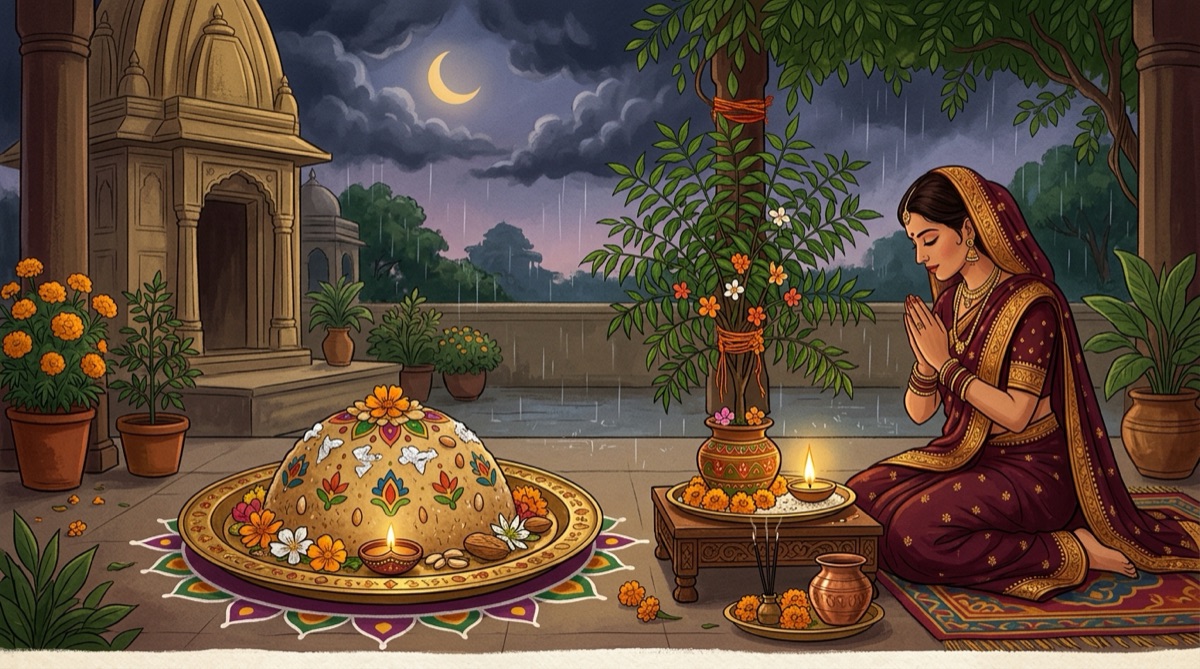
If you travel through Rajasthan, Uttar Pradesh, Madhya Pradesh, or Bihar in the monsoon month of Bhadrapada, you will notice a soft, festive warmth in every household. Raindrops patter on rooftops, the fragrance of roasted gram flour (sattu) fills the kitchen, and women gather in elegant dark green and red saris to sing traditional folk songs celebrating love, rain, and devotion.
This is Kajari Teej—also known as Badi Teej, Satudi Teej, or Kajali Teej.
Falling on the Tritiya Tithi (third day) of the Krishna Paksha in the month of Bhadrapada (usually occurring 15 days after Hariyali Teej), Kajari Teej holds a special place in the hearts of married and unmarried women. While Hariyali Teej celebrates the arrival of green monsoon beauty, Kajari Teej honors the deep emotional bond of marriage, patience through life’s dark clouds (Kajra / dark rainclouds), and unwavering devotion to Lord Shiva and Goddess Parvati.
In 2026, Kajari Teej will be celebrated on Sunday, 30 August 2026 (with Tithi calculations varying slightly based on local sunrise in your city's Panchang).
Whether you are keeping this sacred fast for the first time or looking to understand the traditional Sattu ritual and Neem Mata worship, this comprehensive guide walks you through every step of the celebration with warmth and simplicity.
The Core Meaning: Why is it Called "Kajari" Teej?
To appreciate this festival, let us look at the three symbolic origins of the name:
- The Dark Monsoon Clouds (Kajal): The word Kajari comes from Kajal (dark collyrium) or Kajra—referring to the heavy, dark rain-bearing clouds that grace the August sky. The dark clouds symbolize difficult seasons in life, while the glowing diya lit during puja represents the unwavering light of love and faith that sees a couple through hardship.
- The Legend of the Kajali Forest: Ancient folklore speaks of a central Indian kingdom called Kantit, where people sang soulful folk songs (Kajari songs) in memory of a local king and queen whose divine love transcended separation.
- Union of Shiva and Parvati: Like all Teej festivals, Kajari Teej marks Goddess Parvati’s intense penance (Tapasya) to win Lord Shiva as her consort. It reminds us that meaningful relationships are built through patience, shared discipline, and mutual respect.
The Pre-Dawn Ritual: What is Sattu and Why is It Central to Satudi Teej?
In Rajasthan and Gujarat, Kajari Teej is widely famous as Satudi Teej because of a unique culinary ritual: the preparation of Sattu.
Sattu is a traditional, nutrient-dense sweet made by roasting grains (primarily Bengal gram/chana, wheat, or barley), grinding them into a fine flour, and blending them with pure desi ghee, powdered jaggery or sugar, cardamom, and chopped nuts (almonds, cashews, pistachios).
The Sacred Sattu Rules:
- Prepared in Advance: Sattu is prepared the day before or early in the morning before sunrise.
- Decorated Laddoos: The roasted flour mixture is shaped into large, beautiful round mounds or laddoos (Sattu Pind), decorated with silver leaf (Vark), dried rose petals, and coins.
- Offered as Naivedya: The Sattu is offered to Goddess Parvati during the evening puja and is later broken (Sattu Paasna) to break the fast after sighting the moon.
From a health perspective, Sattu is a cooling, protein-rich superfood. Breaking a long day of fasting with a small piece of ghee-laden Sattu provides immediate, steady energy without shocking your digestive system.
The Evening Neem Mata Worship (Neem Puja Vidhi)
A distinctive feature of Kajari Teej is the worship of the sacred Neem Tree (or a branch of the Neem tree), revered as Neem Mata—an embodiment of divine motherly protection, health, and healing energy.
Step-by-Step Neem Puja Flow:
- Setting Up the Pond (Talaab): In a clean tray or plate, create a symbolic small pond using clay or dough. Fill it with a few drops of water and milk.
- Placing the Neem Branch: Insert a small, fresh branch of a Neem tree into the center of the clay pond.
- Lighting the Lamp: Light a ghee diya and incense sticks near Neem Mata.
- Offerings: Apply turmeric (haldi), vermilion (kumkum), and rice grains (akshat) to the Neem branch. Offer fresh flowers, sattu, fruits, and sweets.
- Looking at the Reflection: Women look at the reflection of the lit diya, moon, or Neem branch in the water of the symbolic pond before breaking their fast.
The Vrat Katha: The Legend of the Poor Farmer's Wife
During the evening gathering, women sit together and listen to the Kajari Teej Vrat Katha.
The story speaks of a poor Brahmin farmer who lived with his devoted wife. As Satudi Teej approached, the wife requested her husband to bring her a small portion of Sattu so she could perform the traditional rituals. Lacking money, the farmer secretly entered a wealthy merchant's shop late at night, took only enough chana and sugar needed for one meal, and began to leave.
The shopkeeper caught him, assuming he was a thief. However, when the farmer humbly explained that he took only a handful of ingredients for his wife's sacred Teej fast and left the rest of the store untouched, the merchant was moved by his honesty and devotion. The merchant not only gifted him Sattu and clothes but adopted the poor woman as his sister, blessing the household with lifelong prosperity.
The story highlights two timeless values: honesty in conduct and simplicity in devotion. Goddess Parvati is pleased not by expensive gold, but by an honest heart and sincere effort.
How to Keep the Fast: Traditional & Health-Conscious Tips
- Nirjala Vrat: Traditionally, women keep a Nirjala fast (without water or food) from sunrise until the moon is sighted at night.
- Moon Sighting Ritual: In the evening, after completing Neem Mata puja, wait for the moon to rise. Offer water (Arghya) to the moon, look at the moon through a sieve or in the water reflection, take a sip of water from your partner's hands, and break your fast with a small piece of Sattu.
- For Health Considerations: If you are pregnant, nursing, elderly, or managing a medical condition, do NOT force a strict waterless fast. Scripture emphasizes Shariram Adyam Khalu Dharma Sadhanam (the body is the primary vehicle for duty). You can take fresh fruits, coconut water, or milk while fully participating in prayers and songs.
Frequently asked questions
How is Kajari Teej different from Hariyali Teej and Hartalika Teej? Hariyali Teej falls in the waxing fortnight of Shravan (focusing on monsoon greenery). Kajari Teej falls 15 days later in the waning fortnight of Bhadrapada (focusing on Sattu and Neem worship). Hartalika Teej falls a few days after Kajari Teej in Bhadrapada Shukla Paksha with elaborate clay Shiva-Parvati idols.
What if I cannot find a Neem tree branch in my city? You can draw a symbolic representation of a Neem leaf using turmeric and kumkum on a clean wooden plate or worship a Tulsi plant in your home altar. Devotion is accepted through intention.
Can unmarried women keep Kajari Teej? Yes. Unmarried women observe this fast praying for a loving, virtuous life partner and for personal emotional strength.
Related reading
Get festival dates & muhurat for your city
Check the exact date, tithi and shubh muhurat for your city with the free Naam Jaap Panchang.
Open the Panchang