Karwa Chauth 2026: Date, Moonrise Time, Puja Muhurat, Vrat Katha and a Modern Guide for Couples
By Naam Jaap Editorial Team · July 14, 2026 · Reviewed July 22, 2026 · 7 min read
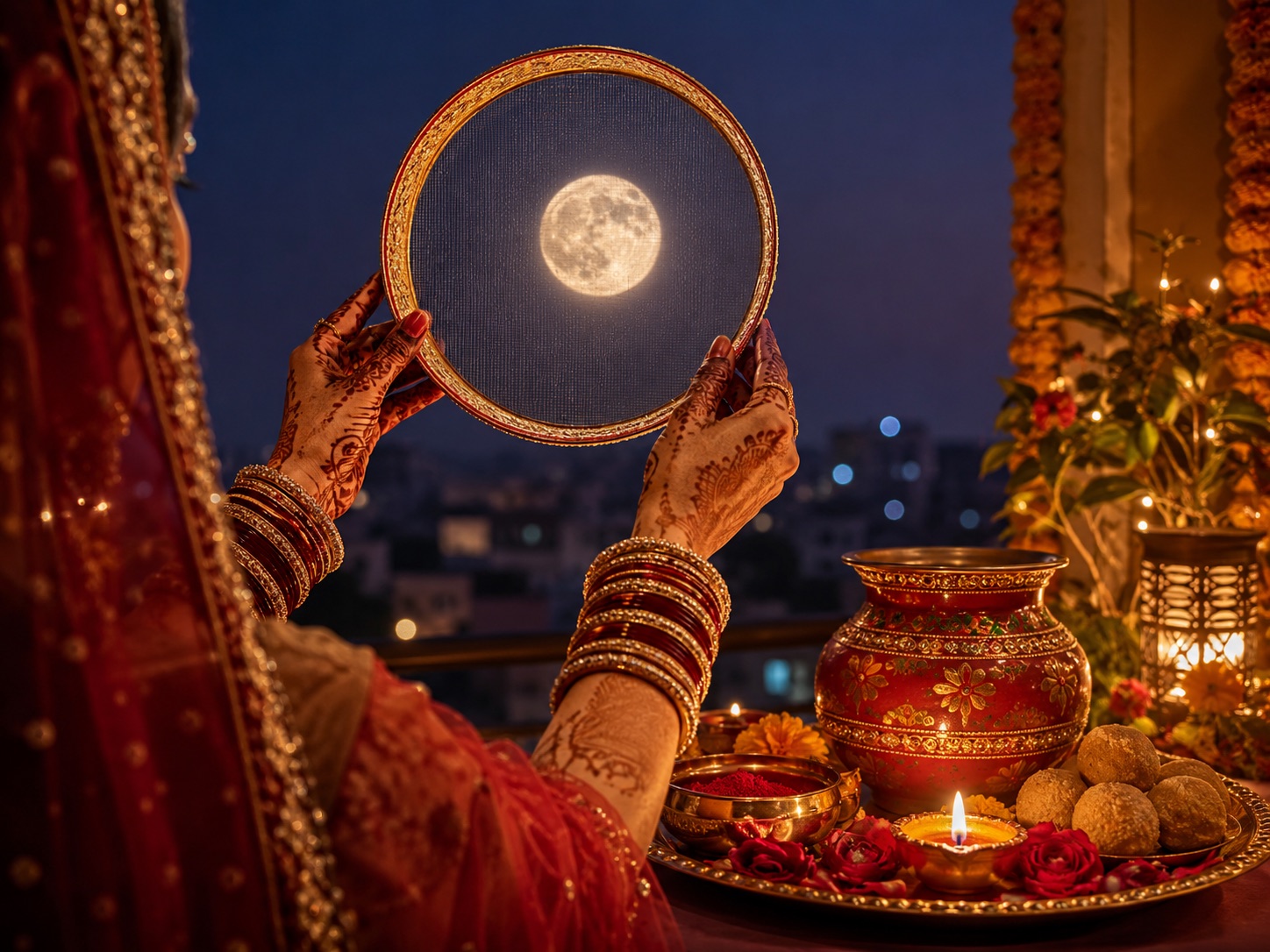
Before sunrise, a kitchen light comes on. Sargi has been arranged—fruit, dry fruits, paratha, sweets and water—and the house is quiet enough to hear bangles touch the steel plate. By evening, mehendi has darkened, women gather with decorated karwas, and everyone checks the sky with the same impatient question: “Has the moon come out?”
Karwa Chauth in 2026 falls on Thursday, 29 October. For New Delhi, the puja muhurat is approximately 5:38 PM to 6:56 PM. The fasting period runs from sunrise around 6:31 AM until moonrise around 8:17 PM. These are Delhi timings; moonrise can differ significantly by city and weather, so check Naam Jaap Panchang locally.
The vrat is especially popular in Punjab, Haryana, Rajasthan, Uttar Pradesh, Madhya Pradesh, Himachal Pradesh and Delhi. Married women traditionally observe a nirjala fast for their husband's wellbeing and long life. Today, some couples fast together or adapt the day into a mutual prayer for health, respect and companionship.
The meaning behind the karwa
A karwa is an earthen water pot. The festival falls in the dry-season transition when water, harvest and family wellbeing carried practical importance. The pot represents sustenance, fullness and the bonds through which women supported one another.
The circle formed during the evening puja matters. Women pass their thalis, listen to the katha and share a ritual rhythm. In earlier households, this companionship could become a vital network beyond the marital home. Karwa Chauth is therefore not only a wife looking at her husband through a sieve; it is also women making a community around endurance, hope and care.
The story of Veeravati
One familiar katha tells of Queen Veeravati, the beloved sister of seven brothers. During her first Karwa Chauth, she became weak while fasting. Unable to watch her suffer, her brothers created a false moon-like light behind a sieve. Believing the moon had risen, she broke her fast early and soon received terrible news about her husband.
Through devotion, guidance and renewed observance, she eventually restored his life. Versions differ, but the story repeatedly highlights discipline, truth and the consequences of loving someone without respecting the purpose of their vow.
For modern readers, the brothers' action contains a useful tension. They cared for Veeravati but deceived her. Good intentions do not automatically make an action wise. Real care listens, tells the truth and helps someone make an informed decision.
Preparing sargi
Sargi is traditionally given by the mother-in-law and eaten before sunrise. A balanced plate may include fruit, nuts, a nourishing cooked item, a small sweet and plenty of water. Avoid excessively salty or sugary foods that increase thirst. A woman living alone or away from family can prepare her own sargi; love is not cancelled by geography.
The pre-dawn meal is also a tender opportunity. Instead of rushing, sit together. Exchange blessings. If relationships are strained, keep the gesture courteous and pressure-free. No gift or meal should become a test of a daughter-in-law's worth.
What to eat for a steady sargi
Because the fast is nirjala — without even water — until moonrise, the pre-dawn sargi is best built around slow-releasing energy and hydration rather than heavy, salty or very sugary food:
- Water-rich fruit — pomegranate, apple, melon or citrus, to hold hydration through the day.
- Slow carbohydrates — a whole-wheat paratha or a little milk seviyan, which digest gradually.
- Nuts and dry fruit — almonds, walnuts, dates and raisins for steady stamina.
- Warm milk or coconut water rather than tea or coffee — caffeine is a diuretic and will leave you thirsty sooner.
Eat it during the Brahma Muhurta, roughly one and a half to two hours before sunrise; once the sun is up, the fast has begun.
Simple puja vidhi
After bathing, take a sankalpa according to your tradition. During the day, chant Shiva-Parvati names, read devotional material and conserve energy. In the evening, wear clean festive clothes if you wish and arrange a thali with diya, roli, akshat, sweets, water and the karwa.
Place images of Shiva, Parvati, Ganesha and Kartikeya or the form followed locally. Gather during the puja muhurat, listen to the Karwa Chauth katha, offer water and prayers, and rotate or exchange thalis according to community custom.
After moonrise, view the moon—often through a sieve—offer arghya and pray. The wife then looks at her husband and breaks the fast with water and food, traditionally offered by him. Customs differ. Eat slowly after a long fast and begin with water and a light portion.
Health comes before performance
A nirjala fast can be physically demanding. Pregnant and nursing women, people with diabetes, kidney conditions or low blood pressure, those taking medication, and anyone with a history of eating disorders should obtain medical advice. If you feel faint, confused or seriously unwell, break the fast and seek help.
Devotion is not measured by ignoring danger. You may observe with fruit, water, one meal or another safe form. Partners should support health decisions instead of using the vrat as emotional proof of love.
Making the day mutual
A husband need not fast to “match” his wife, but he should not treat her labour as a decorative tradition. He can prepare sargi, manage meals for children, arrange transport, check the correct moonrise, attend the puja respectfully and ensure she can rest.
Couples can exchange a small sankalpa after the fast: schedule annual health checks, speak respectfully during conflict, share financial information, make time for elders or put phones away during one meal each day. Praying for a long marriage is meaningful; practising the habits that make it safe and kind is essential.
Suppose Simran fasts each year while Aman buys a gift at the last moment. They enjoy the photographs but keep postponing a difficult conversation about his long work hours. This year, the gift is simpler. They sit on the terrace after dinner and agree on two device-free evenings each month. The moon ritual remains, but the promise finally enters their calendar.
Celebrating without excluding or hurting others
Do not ask an unmarried woman when she will “get her turn.” Do not pity a widow or shame someone who chooses not to fast. Do not use jewellery, gifts or mehendi colour to compare marriages. The visible details of a festival reveal very little about what someone is carrying privately.
If a relationship is abusive, fasting will not make it safe. Reach out to trusted people and qualified support services. A spiritual tradition centred on wellbeing should never be used to demand silence in the face of harm.
Common questions
When is Karwa Chauth in 2026? Thursday, 29 October 2026.
What time will the moon rise? In New Delhi, approximately 8:17 PM. Check your own city because moonrise and visibility vary.
Can I drink water? Traditional nirjala practice avoids it, but health needs come first. Choose a medically safe observance without guilt.
What if clouds hide the moon? Follow local family guidance; some wait for verified moonrise and offer prayer in the moon's direction. Do not rely on an unrelated photograph as a universal ritual solution.
Can husbands keep Karwa Chauth? Some do. It is a personal choice, not a requirement. Mutual respect matters more than copying the same physical act.
When the moon finally appears, people cheer because waiting has ended. Yet marriage is made from much longer kinds of waiting—waiting for understanding, for apology, for difficult seasons to turn. May the sieve help you see clearly: love needs prayer, but it also needs truth, work and everyday tenderness.
Related reading
Get festival dates & muhurat for your city
Check the exact date, tithi and shubh muhurat for your city with the free Naam Jaap Panchang.
Open the Panchang