Radha Ashtami 2026: Date, Puja Vidhi, Vrat, Radha Mantras and the Meaning of Selfless Bhakti
By Naam Jaap Editorial Team · July 14, 2026 · 7 min read
When devotees say “Radhe Radhe” in Braj, the words are more than a greeting. They can mean welcome, farewell, encouragement, remembrance and prayer. A shopkeeper says it while handing over change. A pilgrim says it when the path grows tiring. An old woman says it as naturally as breathing.
Radha Ashtami celebrates the appearance of Shri Radha, the heart of Krishna bhakti and the embodiment of loving devotion. In 2026, Radha Ashtami falls on Saturday, 19 September, on Bhadrapada Shukla Ashtami. Celebrations are especially joyful in Barsana, Rawal, Vrindavan and temples of the Radha-Krishna tradition.
Who is Radha?
Trying to describe Radha only as “Krishna's beloved” is like trying to describe fragrance without the flower. In bhakti traditions, Radha represents hladini shakti—the Divine's power of joy and love. She is the devotee's longing for Krishna and also the grace that makes such longing possible.
Krishna may hold the flute, but Radha teaches the heart how to hear it. Her devotion is not an attempt to gain status, security or recognition. She loves because love itself has become her nature.
This is why devotees often take Radha's name before Krishna's. “Radha-Krishna” reminds us that the Divine is approached not by cleverness alone, but through grace, tenderness and the willingness to place the ego down.
The appearance of Radha Rani
Sacred traditions offer beloved accounts of Radha's appearance. She is associated with King Vrishabhanu and Mother Kirtida in Rawal and Barsana. In a widely told story, the infant Radha kept her eyes closed until Krishna came before her. Only then did she open them, as though her first sight in the world was reserved for him.
Whether you receive this as sacred history or devotional poetry, the image is powerful. What is the first thing your inner eye seeks each morning? Notifications, worries and comparison—or something that reminds you who you want to become?
Radha's closed eyes do not teach us to ignore the world. They ask us to choose the vision through which we will meet it. When love of the Divine becomes the first lens, ordinary duties can carry a different quality.
A simple Radha Ashtami puja at home
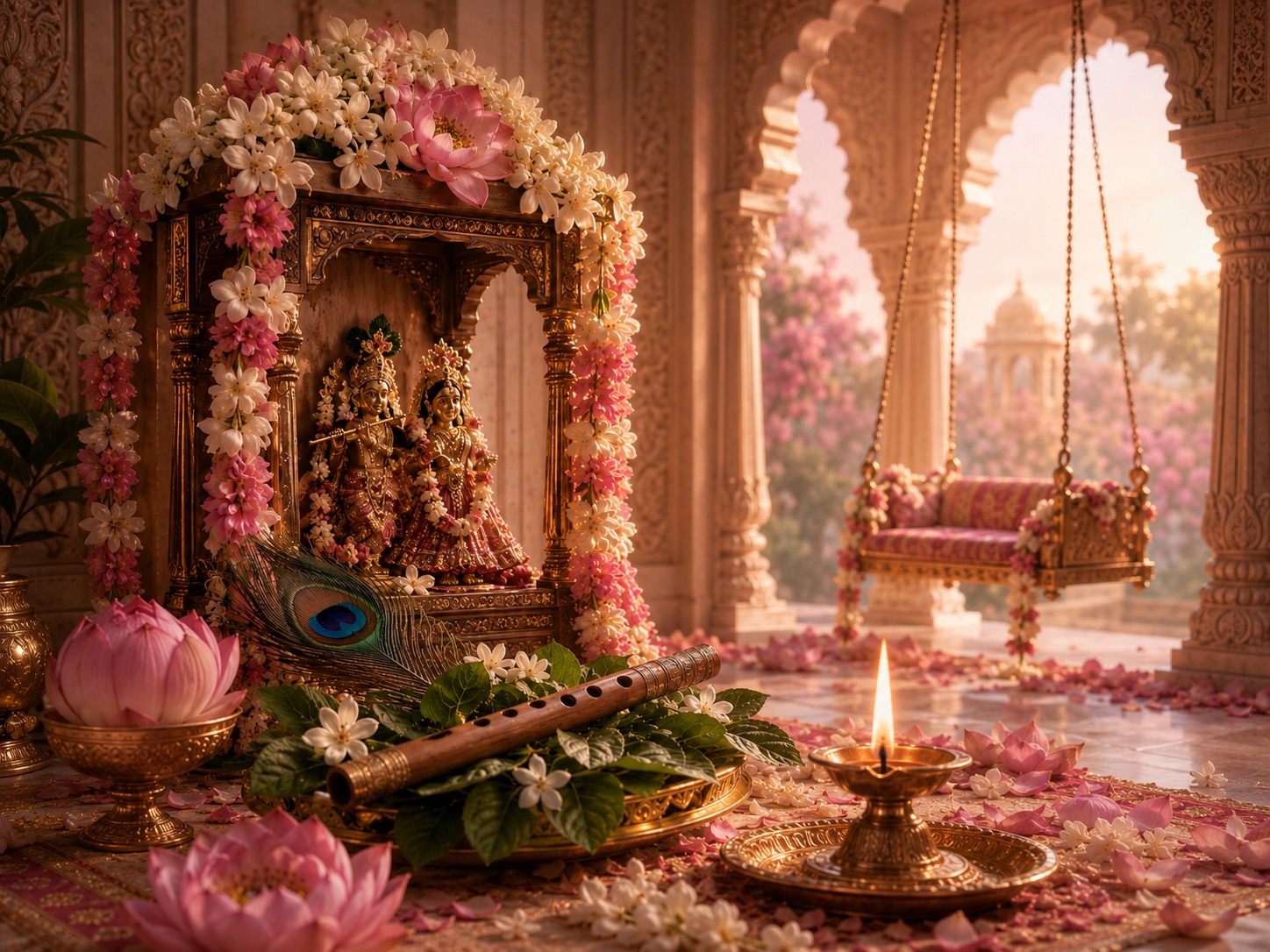
Clean the altar and place an image or murti of Radha-Krishna. Decorate with flowers, especially simple fragrant blooms, and use pink, yellow or white cloth if available. Keep a diya, incense, water, flowers, fruit, sweets and bhog. Tulsi is offered to Krishna in many traditions; follow your sampradaya's practice regarding direct offerings to Radha.
Begin with Ganesha prayer and a simple sankalpa: “May Shri Radha bless me with sincere devotion, humility and kindness. May remembrance become natural in my daily life.” Offer water, flowers, fragrance, light and food.
Chant “Radhe Radhe,” the Hare Krishna Mahamantra, or “Om Radha Krishnabhayam Namah.” You may recite Radha Ashtottara, Radha Kripa Kataksha Stotra or sing bhajans followed in your tradition. Read the appearance katha and perform aarti.
Many temples perform abhishek around midday because Radha Ashtami celebrations are associated with the noon period. Home timings and detailed practices vary, so check your local Panchang and temple programme.
If all you can manage is a photograph, one flower and ten quiet minutes, do that wholeheartedly. Radha bhakti is not an aesthetic performance. The most beautifully decorated altar cannot substitute for a softened heart.
Fasting on Radha Ashtami
Some devotees fast until noon, some take fruit and water, and others follow the vrata rules of their temple or lineage. If fasting is unsafe because of pregnancy, age, diabetes, medication or illness, eat suitable satvik food and keep the day through japa and seva. Never turn devotion into pressure on the body.
A meaningful alternative is an ego fast. For half a day, resist the urge to prove yourself right, advertise a good deed or bring the conversation back to your own experience. This is harder than skipping a meal, and perhaps closer to Radha's lesson.
What does selfless love mean in real life?
The phrase “selfless love” is sometimes misunderstood. It does not mean accepting abuse, erasing boundaries or remaining in an unsafe situation. Radha's love is spiritually free; it is not servitude forced by another person.
Selfless bhakti means the ego no longer keeps a constant account: How much praise did I receive? Did anyone notice my sacrifice? What will I get in return? You still use wisdom and protect dignity, but love is not merely a bargain.
Consider a young man named Rohan who begins chanting because he wants peace. For several weeks he feels calm, then anxiety returns. He thinks the mantra has “stopped working.” His grandmother asks, “Were you remembering Krishna, or only checking whether Krishna had removed your anxiety?” The question changes his practice. He continues seeking professional help for anxiety, but his japa becomes less like a demand and more like relationship. Some days are peaceful, some are difficult, yet the name remains.
That steady returning is a small reflection of Radha bhakti.
Five ways to live Radha's remembrance
Speak the name warmly. Chanting does not have to sound severe. Repeat “Radhe Radhe” as though addressing someone deeply dear. Let the name slow your speech and soften your face.
Serve without announcing everything. Prepare prasad, clean a shared space, help a neighbour or support a devotee quietly. Hidden service weakens the ego's demand for applause.
Protect another person's dignity. Do not turn someone's mistake, grief or private struggle into gossip. Love is visible in what we refuse to expose.
Bring beauty into one ordinary task. Arrange food carefully, water a tulsi plant, fold clothes with attention or make the puja space clean. Bhakti does not wait only for temple hours.
Remember together. Call a friend for ten minutes of naam japa, teach a child one Radha-Krishna bhajan, or ask an elder to tell you about their pilgrimage to Braj.
A simple family celebration
Make small paper footprints leading to the altar and explain that the family is welcoming Radha Rani. Prepare a light bhog such as fruit, kheer, makhan-mishri or a regional favourite. Let each person write one loving quality on a paper flower—patience, loyalty, gentleness, courage or forgiveness—and place it near the altar.
Ask children: “If Krishna's flute can only be heard by a quiet heart, what makes our hearts noisy?” Their answers may be surprisingly honest: fighting, phones, jealousy, rushing. Choose one quiet hour together without screens.
If you use a digital mala, set a shared but pressure-free goal. Eleven sincere repetitions from a child are enough. Do not make devotion another contest in which the highest count wins.
Common questions
When is Radha Ashtami in 2026? It is on Saturday, 19 September 2026.
Is Radha Ashtami eight days after Janmashtami? It occurs on Bhadrapada Shukla Ashtami, traditionally fifteen days after Krishna Janmashtami's Krishna Paksha Ashtami, though common phrasing sometimes causes confusion.
What mantra should a beginner chant? “Radhe Radhe” is simple. The Hare Krishna Mahamantra is also widely chanted. Follow your guru or sampradaya if you have one.
Can I worship Radha without a Radha murti? Yes. Use a picture, write her name, chant, visit a temple or perform mental worship.
What should I ask Radha Rani for? Ask for bhakti, good association, freedom from pride and the ability to remember the Divine during ordinary life—not only during difficulty.
Radha Ashtami is not only a birthday celebration. It is an invitation to notice the quality of our love. Is it restless for recognition? Does it disappear when results are delayed? Or can it become steady, generous and alive in the smallest actions?
When you say “Radhe Radhe” today, do not rush through the two words. Let the first “Radhe” call your wandering mind home. Let the second offer that mind with love.
Related reading
- Today's Panchang for your city
- Krishna Janmashtami 2026
- How to use a japa mala
- Naam Jaap mantra counter
Get festival dates & muhurat for your city
Check the exact date, tithi and shubh muhurat for your city with the free Naam Jaap Panchang.
Open the Panchang