
Varalakshmi Vrat 2026: Date, Puja Timings, Kalash Sthapana, Vrat Katha and a Simple Home Guide
By Naam Jaap Editorial Team · July 14, 2026 · 8 min read
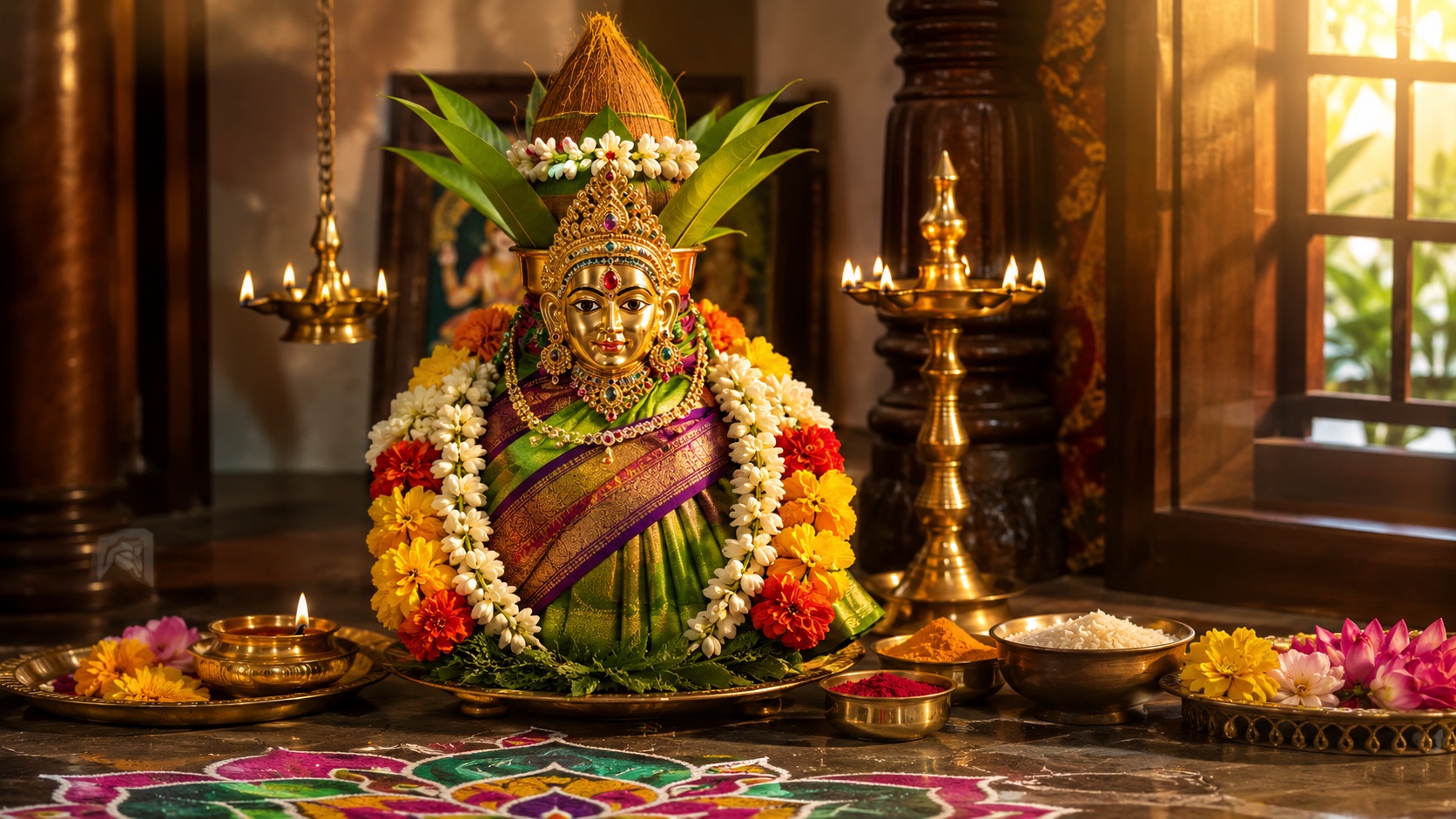
On the morning of Varalakshmi Vrat, a home can feel festive before anyone says a word. The floor has been swept, a fresh rangoli waits near the doorway, mango leaves frame a shining kalash, and the fragrance of cardamom drifts in from the kitchen. A woman adjusts the sari around the decorated face of Amma and calls her daughter: “Come, place one flower. Lakshmi has come home.”
That last sentence carries the feeling of the day. Varalakshmi is not worshipped as a distant idea of wealth. She is welcomed as a gracious presence—the abundance that appears as food in the kitchen, peace between family members, useful work, good health, courage during difficulty, and hands willing to share.
Varalakshmi Vrat in 2026 falls on Friday, 28 August. It is especially important in Karnataka, Andhra Pradesh, Telangana, Tamil Nadu and parts of Maharashtra. The vrat is observed on the Friday before Shravana Purnima. Puja timings depend on the local lagna and city, so readers should check Naam Jaap Panchang for their location rather than copying one national time.
Who is Vara Lakshmi?
“Vara” means boon or blessing. Vara Lakshmi is the form of Goddess Lakshmi who grants worthy wishes and represents many dimensions of wellbeing. Devotees often connect her with the Ashta Lakshmis: Adi Lakshmi, Dhanya Lakshmi, Dhairya or Veera Lakshmi, Gaja Lakshmi, Santana Lakshmi, Vijaya Lakshmi, Vidya Lakshmi and Dhana Lakshmi.
Notice how only one of these is simply money. There is nourishment, courage, learning, family wellbeing, victory over difficulty and spiritual grounding. The tradition quietly corrects a common mistake: prosperity is not merely having more; it is having what allows life to flourish.
A person may have a large bank balance but no rest, no trusted friend and no time to eat with the family. Another household may live modestly yet have skill, laughter, enough food and people who arrive when trouble comes. Varalakshmi puja invites you to ask what kind of richness you are actually seeking.
The story of Charumathi
The most loved Varalakshmi vrat katha tells of Charumathi, a devoted woman who lived in the ancient kingdom of Magadha. She cared for her family sincerely and carried out her responsibilities with humility. Goddess Lakshmi appeared in her dream and asked her to observe a special vrat on the Friday before Shravana Purnima.
Charumathi did not keep the blessing secret. She invited other women, and together they prepared a kalash, worshipped the Goddess and tied sacred threads. As the puja progressed, the women were blessed with signs of abundance and wellbeing. The story emphasises not only Charumathi's devotion but her instinct to gather and share. Prosperity expanded because it was not hoarded.
Imagine the same spirit today. A woman learns a useful financial skill and teaches her sisters. A neighbour gets a job lead and passes it on. A mother does not merely pray for her daughter's future; she ensures the girl receives education and confidence. This is Lakshmi moving from one home to another.
Preparing for the vrat without turning it into pressure
Clean the home and puja area the previous day if possible. Decide the menu, soak what is needed and arrange flowers early. Festive devotion becomes exhausting when one person is expected to cook, decorate, host and perform every ritual alone. Ask family members to help. One can make the toran, another can cut fruit, and a child can arrange flowers.
Common samagri includes a kalash, clean water, rice, coconut, mango or betel leaves, turmeric, kumkum, sandalwood, flowers, a diya, incense, betel nuts and leaves, fruit, sweets, coins, a new cloth and a sacred thread. Regional lists vary. Use what belongs to your tradition and budget. Lakshmi does not leave because the decoration was simple.
Setting up the kalash
Spread a clean cloth on a stable platform and draw a small rangoli. Place rice on a plate and seat the kalash upon it. Fill the kalash with clean water; many families add rice, a coin, turmeric, betel nut or fragrant items according to custom. Apply turmeric and kumkum outside. Arrange leaves at the mouth and place a coconut on top.
Decorate the kalash with a sari cloth, flowers, jewellery or a Varalakshmi face if your family uses one. The kalash symbolises fullness and the living presence of the Goddess. Decoration should therefore feel like hospitality, not a competition with photographs online.
A simple Varalakshmi puja flow
Bathe, wear clean clothes and sit calmly before the altar. Begin with Ganesha prayer. Take a sankalpa in your language: “May this worship bring wise prosperity, health, harmony and generosity to our home. May what we receive be used well.”
Invoke Varalakshmi into the kalash. Offer water, turmeric, kumkum, sandalwood, flowers, akshat, incense and light. If you know Lakshmi Ashtottara Shatanamavali, offer a flower or kumkum with each of the 108 names. Beginners may chant “Om Shreem Mahalakshmyai Namah” 11, 21 or 108 times.
Read or listen to Charumathi's vrat katha. Offer naivedya—payasam, pongal, obbattu, kozhukattai, fruit or the food followed in your region. Perform aarti and do pradakshina. A sacred yellow thread with knots may be worshipped and tied on the wrist according to family custom. Share prasad and offer tambulam to invited women if that tradition is practised.
If you do not know formal Sanskrit, speak respectfully in your mother tongue. Tell the Goddess what you are thankful for, where the family needs wisdom and how you hope to serve. A rehearsed mantra can be beautiful; an honest prayer can be beautiful too.
How is the fast observed?
Some devotees fast until the puja is complete, some take fruit or liquids, and others eat one satvik meal. Follow your family tradition without risking health. Pregnant or nursing women, elderly people, those with diabetes or medication needs, and anyone recovering from illness should consult a medical professional and choose a safe observance.
Fasting is not a transaction in which hunger purchases a boon. Its purpose is attention and discipline. You can also fast from unnecessary spending, complaint or waste. If your body requires food, eat with gratitude and continue the worship without guilt.
What prosperity can look like in an ordinary home
Suppose Kavya and Arun are worried about finances. Kavya performs Varalakshmi puja each year and prays for abundance, but avoids looking at the household accounts because they make her anxious. This year, after the aarti, the couple make a small Lakshmi sankalpa. They list expenses, begin an emergency fund and cancel two subscriptions they no longer use. They also set aside a modest amount for charity.
No gold coins appear overnight. Yet within months, the home feels steadier. Their prayer did not replace action; it gave action a sacred direction. Lakshmi is honoured when money is earned ethically, understood clearly, spent thoughtfully and shared without arrogance.
Ways to include the whole family
Ask children to name eight kinds of wealth that cannot be bought: health, knowledge, time, courage, friendship, clean water, safety and love. Let them create one paper lotus for each. Invite elders to explain a family recipe or the way their mothers arranged the kalash.
Men can cook, clean, receive guests and join the aarti. Although the vrat is traditionally led by women in many communities, wellbeing is not a woman's responsibility alone. A home becomes auspicious through shared care.
If someone attending is unmarried, widowed, divorced or child-free, welcome her without intrusive questions. The Goddess is not confined to one marital identity, and a devotional gathering should never make a woman feel incomplete.
Common questions
When is Varalakshmi Vrat in 2026? It is on Friday, 28 August 2026.
Is it the same as Lakshmi Puja on Diwali? No. Both honour Lakshmi, but Varalakshmi Vrat is a distinct Shravana observance with a kalash, sacred thread and Charumathi katha in many South Indian traditions.
Can a beginner perform it? Yes. Keep a clean space, establish the kalash, offer flowers and food, chant Lakshmi's name and read the katha. Seek family guidance for specialised customs.
What if I cannot invite women or give gifts? The puja remains valid. Share prasad with whoever is present or donate food within your means. Do not borrow money merely to make the vrat look elaborate.
Can I perform the puja while living outside India? Yes. Use locally available flowers and foods, check your city's Panchang and preserve the intention rather than worrying about recreating every material exactly.
At the end of the puja, look once more at the kalash. It is full, but it is also pouring its meaning outward—into prasad, blessings, hospitality and generosity. That is the kind of abundance Varalakshmi represents. Not wealth locked away, but wellbeing that circulates.
This year, ask for prosperity. Also ask for the wisdom to recognise it, the discipline to protect it and the heart to share it.
Related reading
- Today's Panchang for your city
- Diwali 2026: Lakshmi Puja muhurat & the five days
- Sawan 2026: Shravan Somwar guide
- Naam Jaap mantra counter
Get festival dates & muhurat for your city
Check the exact date, tithi and shubh muhurat for your city with the free Naam Jaap Panchang.
Open the Panchang