Pitru Paksha 2026: Complete Shraddha Dates, Tarpan Guide, Ritual Meaning and What to Do When the Tithi Is Unknown
By Naam Jaap Editorial Team · July 14, 2026 · 7 min read
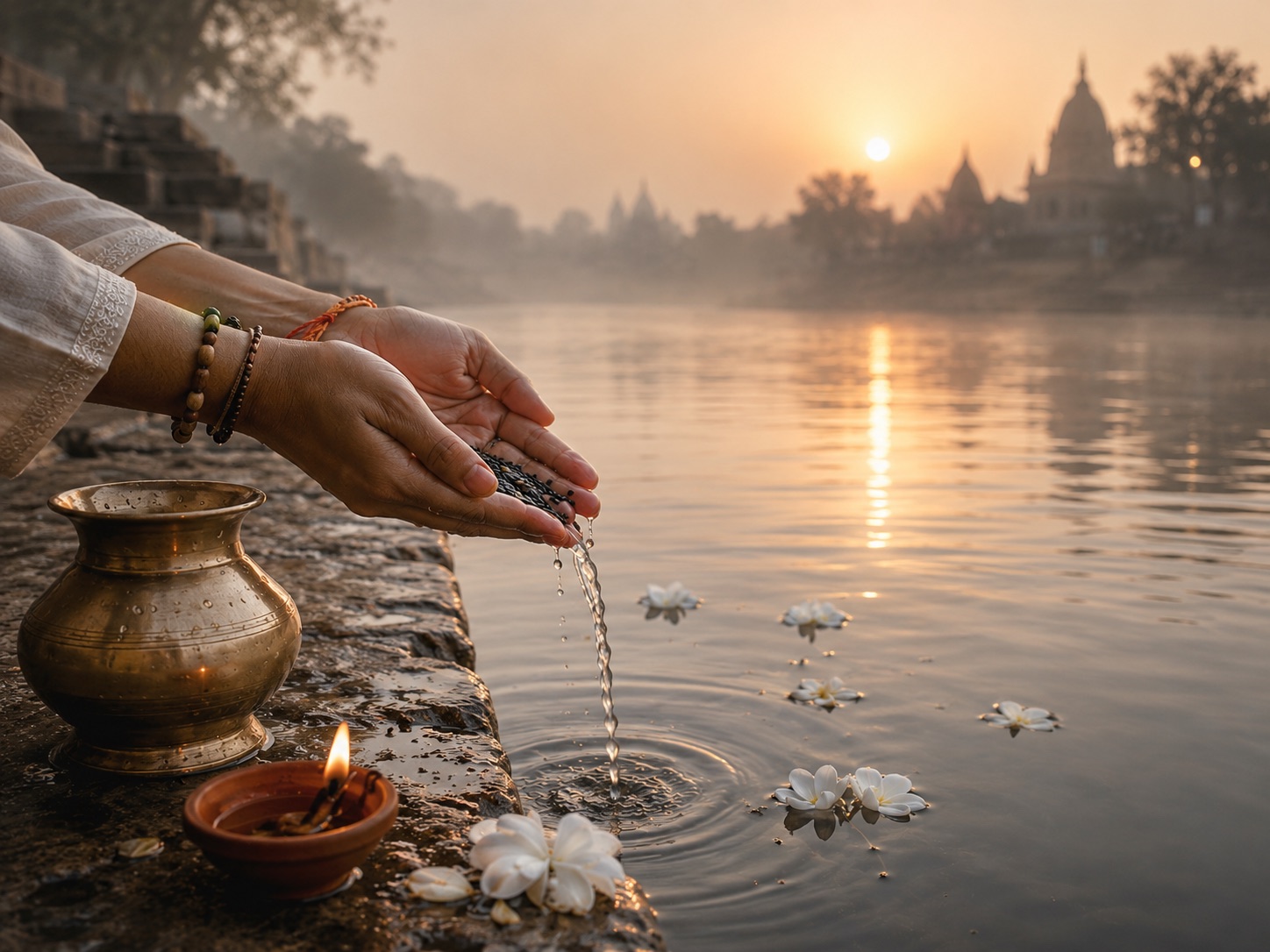
Every family carries names that are no longer called from the next room. A grandfather who rose before sunrise. A mother whose recipe nobody can reproduce exactly. A sibling remembered at a certain song. Most days, these memories arrive unexpectedly. Pitru Paksha gives them a place at the table.
Pitru Paksha is the annual fortnight dedicated to remembering ancestors through Shraddha, tarpan, prayer, food offerings and charity. In 2026, Purnima Shraddha is on Saturday, 26 September. Pratipada Shraddha begins on 27 September, and the fortnight concludes with Sarva Pitru Amavasya on Saturday, 10 October.
The main 2026 dates are:
- 26 September — Purnima Shraddha
- 27 September — Pratipada Shraddha
- 28 September — Dwitiya Shraddha
- 29 September — Tritiya Shraddha and Maha Bharani
- 30 September — Chaturthi and Panchami Shraddha
- 1 October — Shashthi Shraddha
- 2 October — Saptami Shraddha
- 3 October — Ashtami Shraddha
- 4 October — Navami Shraddha
- 5 October — Dashami Shraddha
- 6 October — Ekadashi Shraddha
- 7 October — Dwadashi and Magha Shraddha
- 8 October — Trayodashi Shraddha
- 9 October — Chaturdashi Shraddha
- 10 October — Sarva Pitru Amavasya
Rules can vary by tithi, circumstances of death, family tradition and region. Exact Kutup, Rohina and Aparahna timings depend on the city. For a formal rite, consult a trustworthy priest familiar with your family's practice and verify timings in the local Panchang.
What does Shraddha mean?
The word is connected with shraddha—faith, sincerity and heartfelt trust. The rite is not simply an attempt to feed invisible relatives. It is a disciplined act of gratitude. We acknowledge that our bodies, language, opportunities, habits and even unresolved struggles did not begin with us.
Hindu tradition speaks of pitru rina, a debt toward ancestors. “Debt” here need not mean guilt. It can mean responsibility: receive the life passed to you, refine what was harmful, preserve what was wise and pass something better forward.
Your grandfather may have given the family courage but also a habit of silence around emotions. Honouring him does not require repeating both. You can preserve the courage and end the silence. Healing an inherited pattern can itself be an offering to the lineage.
How to choose the Shraddha date
Shraddha is generally performed on the tithi on which the person died, regardless of whether it was Shukla or Krishna Paksha. Special days are followed for certain circumstances according to tradition. If the tithi is unknown, or if the family could not perform the rite earlier, Sarva Pitru Amavasya is commonly chosen for collective remembrance.
Do not guess from the English date alone. A Gregorian date and lunar tithi do not remain aligned every year. Check old records, ask elders and use a reliable Panchang. If uncertainty remains, take priestly guidance without allowing anyone to frighten you.
A simple remembrance at home
Formal Shraddha has detailed rules and is best learned within a family or under a priest. A simple home remembrance can still be sincere. Bathe, wear clean modest clothes and clean the prayer area. Place a photograph only if that suits your tradition; some families do not use one during the rite.
Light a diya. Remember the ancestor by name and gotra if known. Offer clean water with black sesame as tarpan only if you understand and follow your family method; otherwise offer plain water mentally and request guidance before attempting specialised ritual gestures.
Prepare fresh satvik food without onion and garlic according to household custom. Portions may be offered symbolically, to a cow, crow or other beings where safe and lawful, and to a Brahmin or person in need. Feeding animals should be hygienic and appropriate—do not leave harmful food or litter outdoors.
Donate food, clothes, education support or medical help in the ancestor's memory. Read the Bhagavad Gita, Vishnu Sahasranama, Garuda Purana passages used responsibly, or chant the name of the family's ishta devata. End with a prayer for peace: “May those who came before us be satisfied. May their blessings guide us toward dharma.”
Why food matters
Food carries family memory with unusual strength. One taste can bring an entire kitchen back. That is why Shraddha meals are often prepared with restraint, purity and inherited recipes. The cook is not merely following a menu; the family is saying, “We remember how you nourished us.”
But avoid wasteful display. The value of feeding people is not in the number of dishes photographed. If resources are limited, prepare a modest meal and help one person sincerely. An offering made through debt and social pressure misses the spirit of gratitude.
When grief is recent
Festivals often expect joy; Pitru Paksha allows quietness. If the loss is recent, rituals may bring comfort or reopen pain. Both responses are normal. Let family members participate at their own pace. A child may place a flower. Someone may prefer to cook. Another may be unable to sit through the full rite.
Spiritual practice can accompany grief counselling, community support and medical care. Telling a grieving person to “move on because the soul is eternal” may be philosophically intended but emotionally cruel. The Gita's wisdom does not forbid tears. Krishna teaches Arjuna while Arjuna is trembling and overwhelmed; compassion enters before instruction.
An ordinary family example
After their father's death, two brothers argue each year about the Shraddha. One wants every step performed exactly; the other lives abroad and feels judged for joining by video. Their mother finally asks them what their father valued most. Both answer, “Our education, and that we stay together.”
They still perform the rite with priestly guidance. They also establish a small scholarship in his name and agree to speak without accusation during the annual planning. The ritual remains traditional, but its fruit becomes visible in the relationship he cared about.
What is usually avoided during Pitru Paksha?
Many families avoid weddings, griha pravesh, major celebrations and launching auspicious ventures during this reflective fortnight. Some postpone buying luxury items or beginning new ceremonies. Daily work, study, medical care and necessary decisions continue. Pitru Paksha is not a period of fear or inactivity.
Food restrictions and grooming customs vary. Follow your family tradition without policing neighbours. The central discipline is remembrance, simplicity and charity—not finding reasons to declare another household wrong.
Common questions
What if I do not know the death tithi? Sarva Pitru Amavasya on 10 October 2026 is commonly used for ancestors whose tithi is unknown. Seek family or priestly guidance.
Can daughters perform Shraddha or tarpan? Practices differ across communities, and many families and teachers permit daughters, especially when they are the available or devoted descendants. Follow informed guidance without insulting sincere participation.
Can I observe Pitru Paksha outside India? Yes. Use the Panchang for your present location, speak with a priest if formal timing matters, donate locally and remember your ancestors with sincerity.
What if family relationships were painful? You do not have to romanticise harm. You can pray for peace, maintain safe boundaries and resolve not to pass the harm onward. Honest healing is more respectful than a false story.
Is Shraddha only for men? Customs vary, but remembrance, prayer, cooking, charity and preserving family history have always involved the whole household.
Before Pitru Paksha ends, ask an elder one question about the family and record the answer. Label old photographs. Write down a recipe. Learn the correct spelling of a great-grandmother's name. Ritual water flows through the fingers; memory also disappears if nobody holds it carefully.
We cannot repay the gift of life. We can receive it consciously. Light the diya, offer water, feed someone and speak the names with tenderness. Then live in a way that gives those names honour.
Related reading
- Today's Panchang for your city
- Navratri 2026
- Ekadashi 2026: meaning & fasting rules
- What is Naam Jaap?
Get festival dates & muhurat for your city
Check the exact date, tithi and shubh muhurat for your city with the free Naam Jaap Panchang.
Open the Panchang