Kalki Jayanti 2026: Date, Prophecies of the 10th Avatar & Kali Yuga Meaning
By Naam Jaap Editorial Team · July 28, 2026 · 5 min read
Throughout the vast tapestry of Vedic literature, the concept of Avatara—divine incarnation descending to restore balance whenever darkness overpowers righteousness—is central to Hindu thought.
From Matsya (the fish) who saved the seeds of life, to Sri Ram who established ethical duty (Dharma), and Lord Krishna who imparted the timeless wisdom of the Bhagavad Gita, nine major Avatars of Lord Vishnu have already appeared in past Yugas.
However, there is one incarnation whose arrival is described entirely in the future tense: Lord Kalki, the tenth and final Avatar of Vishnu.
Every year on the Shashti Tithi (sixth day) of the Shukla Paksha in the month of Shravan, spiritual seekers celebrate Kalki Jayanti—a day dedicated not to remembering a historical past event, but to cultivating hope, moral clarity, and inner strength amidst the chaos of the present age (Kali Yuga).
In 2026, Kalki Jayanti will be observed on Wednesday, 19 August 2026.
In this article, we will explore the fascinating prophecies of the Kalki Purana and Srimad Bhagavatam, uncover the symbolic meaning of Lord Kalki's white horse and flaming sword, and learn how to keep your mind steady during challenging times.
The Prophecies: What Do the Scriptures Say About Kalki Avatar?
The Srimad Bhagavatam (Canto 12, Chapter 2) and the Kalki Purana contain vivid, symbolic descriptions of the state of the world towards the end of Kali Yuga and the eventual descent of Lord Kalki:
- The Birthplace: Kalki will be born in a sacred village named Shambhala (a word meaning "abode of peace and tranquility") in the house of a pious Brahmin named Vishnuyasha and his mother Sumati.
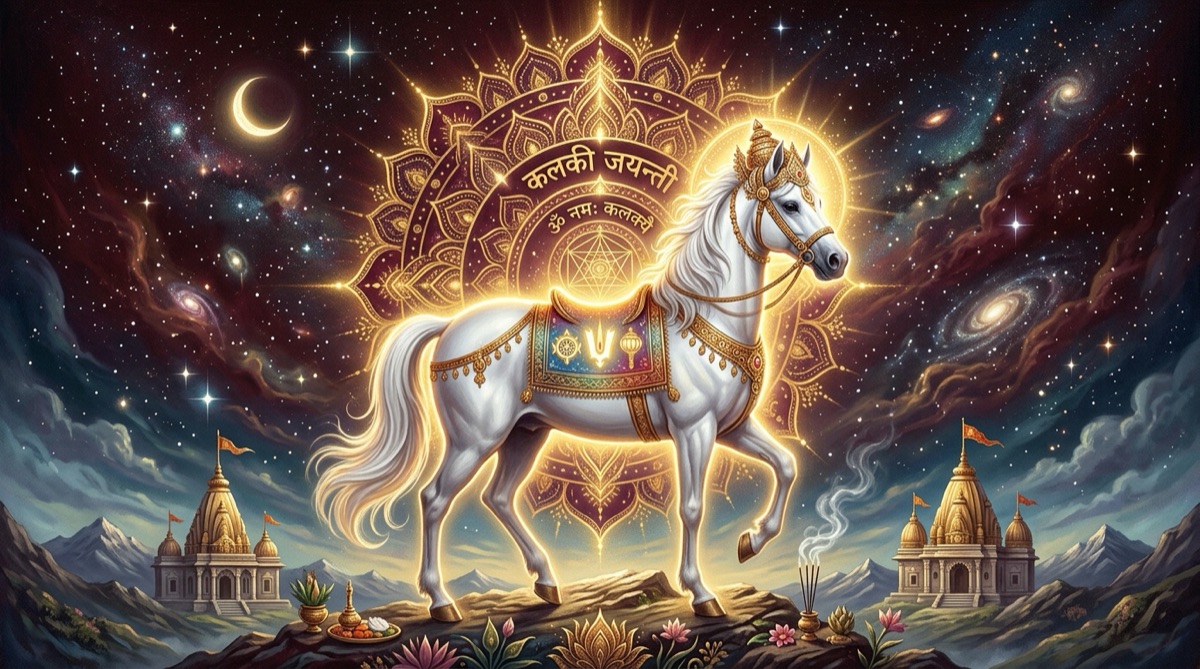
- The Mount (Devadatta): He will ride a magnificent white horse named Devadatta ("God-given"). The white horse symbolizes swift, unblemished purity and unstoppable spiritual power.
- The Sword of Wisdom (Ratnamaru): He will wield a blazing, double-edged sword capable of severing ignorance, greed, corruption, and dark forces.
- Restoration of Satya Yuga: Upon defeating the personification of negativity (Kali), Kalki will re-establish the Golden Age of truth, harmony, and righteous living (Satya Yuga).
Decoding the Symbolism: What Does Kalki Represent for Us Today?
While popular culture often views prophecies like sci-fi action movies, Vedantic masters teach us to look at the deeper psychological and spiritual metaphors within the scriptures:
1. The White Horse = Controlled Mind
In Vedic symbolism, a horse represents the human senses and mental energy (Indriyas). A wild horse runs chaotically, leading to destruction. The White Horse (Devadatta) represents a mind that is purified, controlled, and driven by divine wisdom rather than impulsive desires.
2. The Flaming Sword = Discernment (Viveka)
The double-edged sword represents Viveka—the sharp power of spiritual discernment. It is the ability to cut through fake news, toxic outrage, mental confusion, and self-deception, choosing truth over convenient lies.
3. Shambhala = The Peaceful Heart
Shambhala is not merely a hidden geographic location on a map; it is a state of mind. When your heart remains peaceful, compassionate, and untainted by societal corruption, divinity naturally takes birth within you.
How to Celebrate Kalki Jayanti at Home
Kalki Jayanti is a day of hope, mental purification, and high ideal setting:
- Morning Meditation: Sit quietly facing East during sunrise. Meditate on a radiant white light entering your heart, washing away cynicism, anger, and anxiety.
- Chant the Maha-Mantra or Vishnu Namavali: Recite "Om Namo Bhagavate Vasudevaya" 108 times, or chant the Vishnu Sahasranama to fill your environment with positive resonance.
- Practice One Act of Moral Courage: Resolve to make one ethical choice today—speak truth where it is uncomfortable, help someone without expecting recognition, or break a toxic habit.
- Light a Lamp of Hope: Light a ghee lamp in the evening and pray: "May truth triumph over darkness, and may peace prevail in every heart."
Frequently asked questions
Are we currently living in Kali Yuga? According to traditional Vedic astronomy, we are currently living in the early phase of Kali Yuga (which began approximately 5,100 years ago after the departure of Lord Krishna). This is why cultivating daily spiritual discipline (Sadhana) is considered essential for mental well-being today.
Is there a specific fast for Kalki Jayanti? Devotees observe a simple fast from morning until evening, taking fruits, milk, or satvik food, and breaking the fast after evening prayers to Lord Vishnu.
Related reading
Keep a Hanuman Chalisa sadhana
Read the Chalisa, track each recitation and complete a 40-day sadhana with the free app.
Get it on Google Play