
Chhath Puja 2026: Four-Day Dates, Nahay Khay, Kharna, Sandhya Arghya, Usha Arghya and Complete Meaning
By Naam Jaap Editorial Team · July 14, 2026 · 7 min read
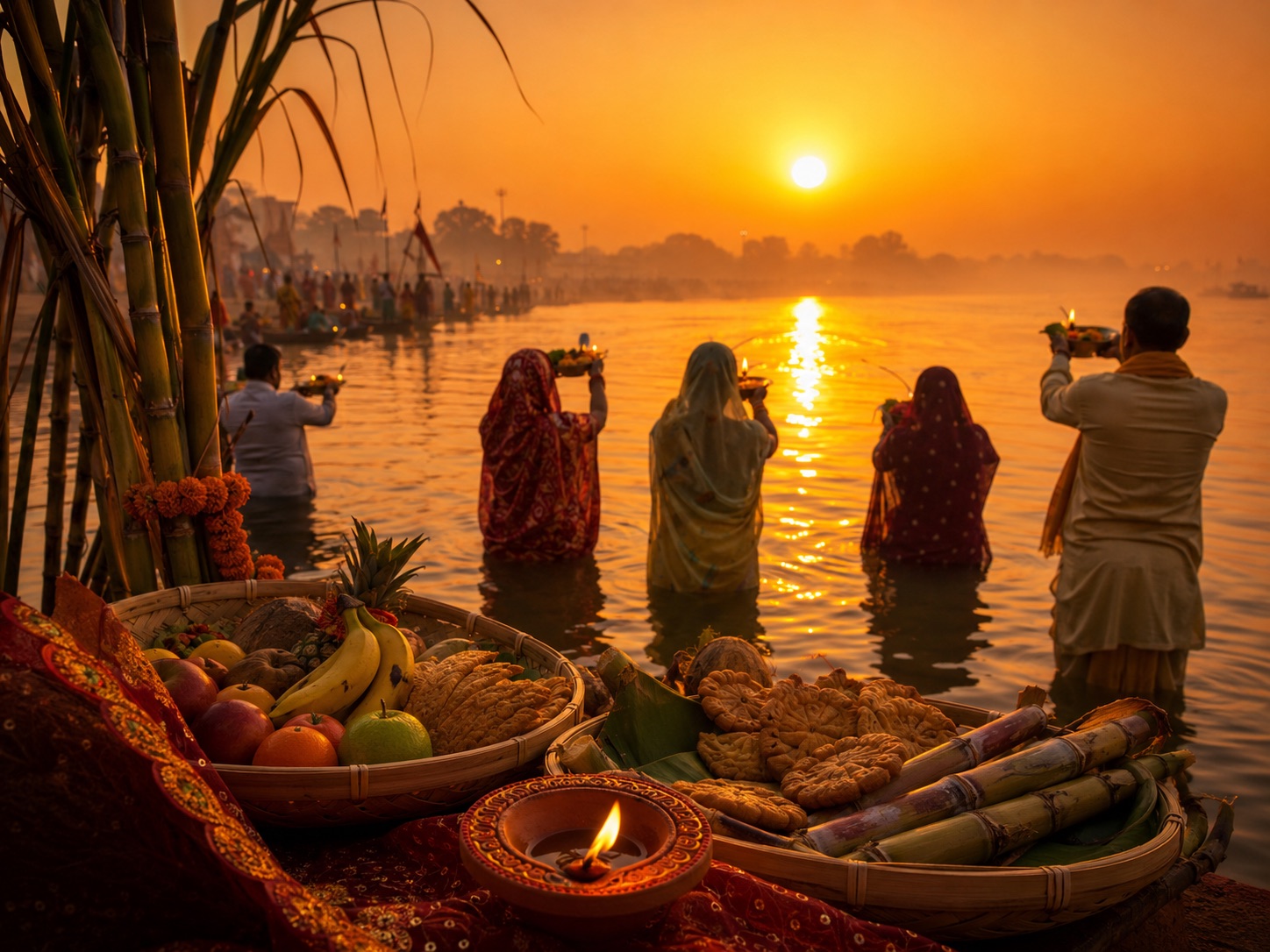
Before dawn, the ghat is already awake. Baskets of fruit and thekua rest beneath clean cloth. Sugarcane stalks lean against one another. Families stand quietly near the water, and the first line of a Chhath geet rises through the darkness. Then the horizon changes. When the sun appears, thousands of hands lift arghya together.
Chhath is among the most disciplined and visually powerful devotional observances in India. Dedicated to Surya Dev and Chhathi Maiya, it is celebrated with particular devotion in Bihar, Jharkhand, eastern Uttar Pradesh and Nepal, and by communities across India and the world.
Chhath Puja 2026 runs from Friday, 13 November to Monday, 16 November:
- 13 November — Nahay Khay
- 14 November — Kharna
- 15 November — Sandhya Arghya to the setting sun
- 16 November — Usha Arghya to the rising sun and completion of the vrat
For New Delhi, sunset on 15 November is approximately 5:27 PM. Local sunrise on 16 November is around 6:44 AM, but readers must check city-specific solar timings and official ghat schedules.
Why both the setting and rising sun are worshipped
Most celebrations honour beginnings and victories. Chhath bows first to the setting sun. This contains a rare lesson: the power that is declining, resting or leaving still deserves gratitude. Only after Sandhya Arghya does the devotee return for Usha Arghya to the rising sun.
Life moves through both. A career grows and later slows. Children arrive and one day leave home. Health changes. The setting sun teaches dignity in completion; the rising sun teaches trust in renewal.
Surya is visible to everyone. His light does not ask about caste, wealth or language before falling on a roof. Worship of the Sun becomes a prayer for life, health, clarity, discipline and impartial generosity.
Day one: Nahay Khay
The vrata begins with purification. The vrati bathes, cleans the home and prepares a simple satvik meal, commonly including rice, chana dal and bottle gourd according to regional custom. Food is prepared with special attention to cleanliness, often on a separate or freshly cleaned stove and with ingredients reserved for the vrat.
The vrati eats first after offering the meal, and other family members may eat afterward. Nahay Khay sets the tone: clean body, clean space, clean food and clean intention.
Day two: Kharna
The vrati fasts through the day and performs Kharna after sunset. A traditional prasad of rasiya kheer made with jaggery, roti and fruit is offered. The vrati breaks the day's fast with this prasad, which is shared with family and visitors.
After Kharna begins the demanding nirjala fast that continues through the next day's Sandhya Arghya and until Usha Arghya on the fourth morning. Families should protect the vrati's rest, hydration before the fast and safety. This is not the time to leave one person doing all the cleaning and carrying.
Day three: Sandhya Arghya
Prasad and offerings are arranged in bamboo soop and baskets: thekua, seasonal fruit, sugarcane, coconut, turmeric and ginger plants, radish and other locally followed items. Families walk to a clean ghat while singing traditional songs.
The vrati stands in water and offers arghya to the setting sun. The scene is communal, but the prayer is intensely personal. People pray for children, health, gratitude, fulfilment of vows and the welfare of the family.
Day four: Usha Arghya
Before dawn, everyone returns to the ghat. Arghya is offered as the first sun appears. The vrati completes prayers, receives blessings and breaks the long fast, often with ginger, water, sharbat or prasad according to custom.
The return home feels lighter. The baskets are emptier; the family carries prasad, tired feet and the quiet satisfaction of a vow completed together.
The story and presence of Chhathi Maiya
Chhathi Maiya is revered as a protective mother associated with children, fertility and family wellbeing. Traditions connect her with Shashthi Devi and the nurturing power of nature. Chhath narratives also remember Surya worship by figures such as Karna and Draupadi in epic tradition.
Different families hold different kathas close. An article should not force all of them into one single origin story. The living truth of Chhath is carried as much in the vrati's discipline, the songs of women and the preparation of prasad as in any one textual explanation.
Thekua and the devotion of hands
Thekua is not merely a sweet associated with the festival. Families shape it carefully from wheat flour, jaggery or sugar and ghee, sometimes pressing patterns by hand or mould. Recipes carry small signatures—fennel in one home, coconut in another, a design learned from a grandmother.
Because prasad preparation follows purity rules, visitors should ask before entering the cooking space or touching baskets. Respect is practical. Do not photograph people closely without consent, obstruct the ghat for a video or treat an active vrat like a spectacle.
Safety at the ghat
Use authorised, well-lit ghats and follow local administration instructions. Keep children and elderly family members away from slippery edges and deep water. Wear footwear until the appropriate ritual point, move slowly and do not overload boats or temporary platforms.
Keep electrical wires and lamps away from water. Carry drinking water and basic medical supplies for non-fasting family members. If a vrati becomes faint, confused or seriously unwell, seek medical help. The family must not value public completion of the fast above a person's life.
Avoid soap, plastic, synthetic cloth, chemical colour and food packaging in the water. Collect flowers and waste after the ritual. Surya worship performed beside a polluted river should make us more protective of that river.
For families living away from Bihar or India
Find an organised local community programme early. If safe water access is unavailable, many families create a clean symbolic water space at home and offer arghya from a terrace, garden or open place where the sun is visible, guided by elders and community custom.
Use locally available fruit and simple bamboo or reusable baskets. Sing the songs you know, even if your children answer in another language. Explain each day instead of only giving instructions. Tradition survives migration when meaning travels with the ritual.
An example across generations
Seventy-year-old Sharda Devi has kept Chhath for decades. Her granddaughter Naina lives in Bengaluru and cannot return home. This year, Naina calls during prasad preparation and writes down the exact thekua recipe. She joins a local ghat, checks the solar timing for Bengaluru and sings with her grandmother over a call before leaving.
The two women are separated by distance but connected through discipline and song. Naina does not create an identical village ghat. She carries the intention faithfully into the place where she lives.
Common questions
When is Chhath Puja in 2026? The four days are 13–16 November, with Sandhya Arghya on Sunday, 15 November and Usha Arghya on Monday, 16 November.
Who can keep Chhath vrat? Women and men both observe it. It is a demanding vrata traditionally undertaken with preparation, family support and attention to health.
Can a beginner start alone? Learn from an experienced vrati or trustworthy community. The purity rules, schedule and long nirjala fast make guidance especially valuable.
Why is no murti central to the puja? Chhath worship is directed toward the visible Sun and Chhathi Maiya, with water, earth, harvest and light forming the sacred setting.
Can the fast be modified for health? Medical safety must come first. Speak with a doctor and an experienced elder. Prayer and seva remain possible even when a strict nirjala fast is unsafe.
When the family stands before the setting sun, nobody asks it to stop setting. They offer thanks. When they return before dawn, nobody pulls the sun upward. They wait with faith and prepare to receive.
That may be Chhath's deepest teaching: discipline in what is ours to do, humility before what is not, gratitude at the ending and trust at the beginning.
Related reading
Get festival dates & muhurat for your city
Check the exact date, tithi and shubh muhurat for your city with the free Naam Jaap Panchang.
Open the Panchang