
Ajapa Japa (Soham Meditation): Meaning and a Gentle 10-Minute Practice
By Naam Jaap Editorial Team · August 4, 2026 · Reviewed August 11, 2026 · 4 min read
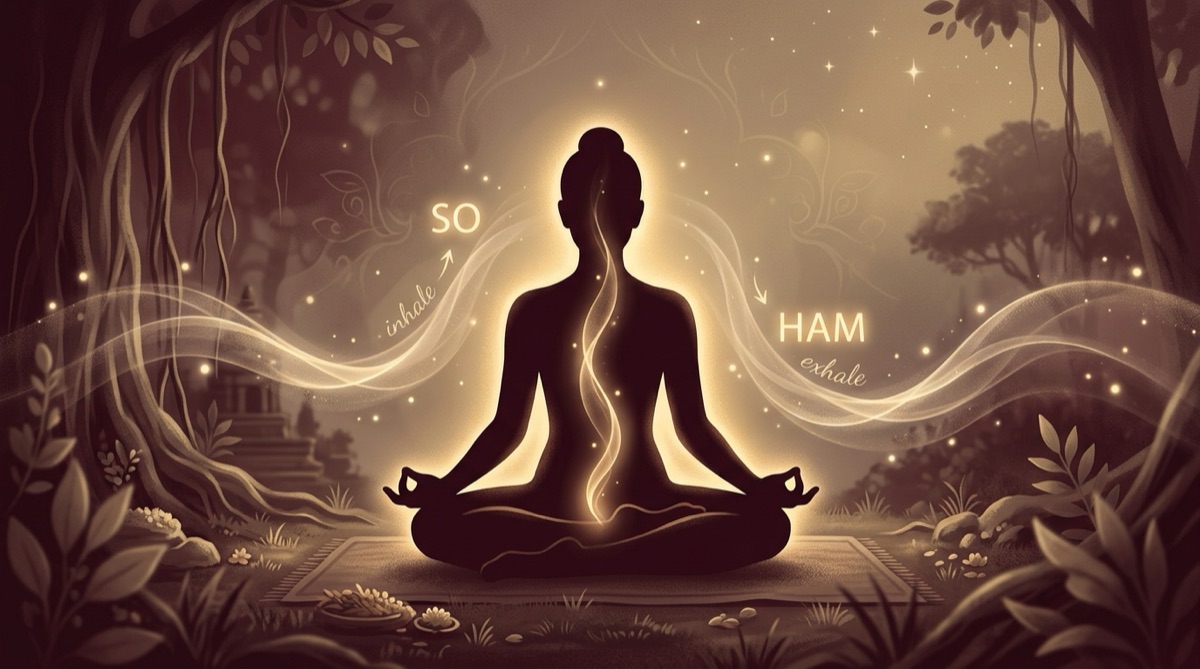
Have you ever tried sitting down to meditate, only to feel frustrated because counting beads on a mala or repeating a complex mantra felt forced, mechanical, or exhausting?
What if you were told that you are already chanting a sacred mantra 21,600 times every single day, without even realizing it?
In the ancient yogic science of the Hatha Yoga Pradipika and Gheranda Samhita, there is a supreme, effortless form of meditation called Ajapa Japa (the "unchanted chant") or Soham Meditation.
Unlike regular chanting (Japa), which requires conscious effort of the tongue or hands, Ajapa Japa is the continuous, natural sound produced by your own breath:
- As you inhale, your breath naturally creates the subtle sound "SO".
- As you exhale, your breath naturally creates the subtle sound "HAM" (pronounced Hum).
Together, SO-HAM translates from Sanskrit to: "I Am That"—I am one with the Supreme Divine Consciousness.
In this guide, we will explore the gentle mechanics of Ajapa Japa, why many people find it calming, and how you can practise this effortless meditation anywhere, anytime.
The Rhythm of 21,600 Daily Breaths
Yogic texts provide a fascinating physiological calculation: an average healthy human being breathes approximately 15 times per minute:
- 15 breaths/minute × 60 minutes = 900 breaths per hour.
- 900 breaths/hour × 24 hours = 21,600 breaths per day.
Every time you inhale, your body quietly whispers "SO" (inviting life and divine energy). Every time you exhale, your body quietly whispers "HAM" (releasing ego, tension, and carbon dioxide).
Without paying a single rupee, carrying a mala, or attending a complex course, your body is continuously performing a 21,600-count prayer from the day you are born until the day you die! Ajapa Japa is simply turning your conscious awareness to this existing inner rhythm.
Why Ajapa Japa Feels So Calming
- No Friction or Mechanical Effort: Because you are not fighting your mind to repeat words or count numbers, there is zero performance pressure. You simply observe what is already happening.
- Slower, Calmer Breathing: Gently following the breath tends to lengthen the exhale, and many people find slow, unhurried breathing relaxing.
- A Reassuring Inner Message: Many practitioners find that gently resting attention on Soham ("I am that") helps quiet mental chatter and self-criticism. This is a contemplative practice, not a treatment for anxiety or any medical condition.
Step-by-Step Guide: How to Practice Soham Ajapa Japa
You can practice Ajapa Japa sitting on a cushion, at your office desk, or lying down before sleep:
The 10-Minute Practice Protocol:
- Sit Comfortably: Sit with your spine upright and hands relaxed on your lap (in Chin Mudra). Close your eyes gently.
- Observe Natural Breath: For the first minute, do not try to control or deepen your breath. Simply feel the cool air entering your nostrils and warm air leaving them.
- Add the Internal Sound:
- As you inhale, silently listen to the sound "SOOOOO" flowing up from your navel to the space between your eyebrows.
- As you exhale, silently listen to the sound "HUMMMMM" flowing down from your eyebrows back to your navel.
- Merge Awareness with Sound: Whenever a distracting thought pops up ("What about dinner?", "What about tomorrow's meeting?"), do not fight it. Gently return your attention to the rhythm of SO on the in-breath and HAM on the out-breath.
- Rest in Stillness: After 8 to 10 minutes, let go of the sound and sit quietly in the peaceful stillness created within your mind.
Frequently asked questions
What is the difference between Japa and Ajapa Japa? Japa involves voluntary, conscious repetition of a mantra (vocal, whispered, or with a mala). Ajapa Japa is involuntary, spontaneous awareness of the natural breath mantra (Soham) that is already occurring continuously inside you.
Can I practice Ajapa Japa before sleeping? Yes! Many people find that following the Soham breath in bed helps quieten racing thoughts, though it is not a treatment for insomnia or other sleep disorders.
Related reading
Colour a mandala, quiet the mind
200+ hand-tuned designs and a calm, offline space in the free Mandala app — now on Google Play.
Get it on Google Play