Tithi Explained: The 30 Lunar Days of the Hindu Calendar
By Naam Jaap Editorial Team · July 3, 2026 · 4 min read
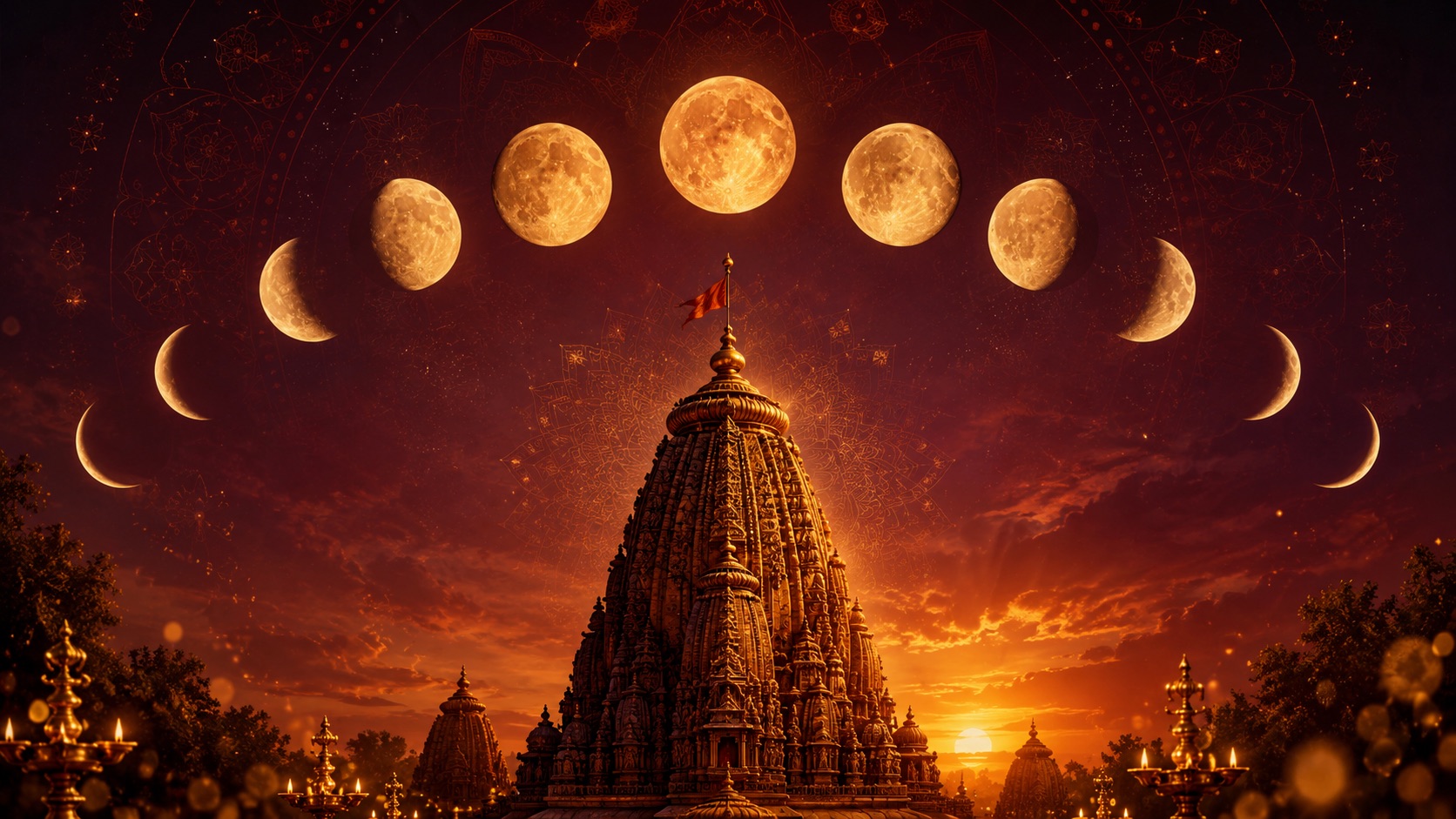
Tithi is the very first and most important of the five limbs of the Panchang. Almost every Hindu festival, fast and ritual is fixed by tithi rather than by the ordinary calendar date. Here's what a tithi actually is, and a clear guide to all thirty.
What is a tithi?
A tithi is a lunar day — but it isn't a fixed 24-hour day. A tithi is defined by the angle between the Moon and the Sun: each time the Moon moves 12° ahead of the Sun, one tithi is complete. Since the Moon's speed varies, a tithi can last anywhere from about 19 to 26 hours — which is why the tithi at sunrise is the one that "counts" for the day.
The two pakshas
A lunar month has 30 tithis, split into two halves called pakshas:
- Shukla Paksha — the bright, waxing fortnight, from the new moon to the full moon (the Moon grows).
- Krishna Paksha — the dark, waning fortnight, from the full moon to the new moon (the Moon shrinks).
Each paksha has 15 tithis.
The 30 tithis and their names
The first fourteen tithis share the same names in both pakshas; only the 15th differs (Purnima vs Amavasya):
| # | Tithi | # | Tithi |
|---|---|---|---|
| 1 | Pratipada | 9 | Navami |
| 2 | Dwitiya | 10 | Dashami |
| 3 | Tritiya | 11 | Ekadashi |
| 4 | Chaturthi | 12 | Dwadashi |
| 5 | Panchami | 13 | Trayodashi |
| 6 | Shashthi | 14 | Chaturdashi |
| 7 | Saptami | 15 (Shukla) | Purnima (full moon) |
| 8 | Ashtami | 15 (Krishna) | Amavasya (new moon) |
The five categories of tithi
Tithis are also grouped into five types, each considered suitable for different activities:
- Nanda (1, 6, 11) — joy and celebration
- Bhadra (2, 7, 12) — health and steady work
- Jaya (3, 8, 13) — victory and courage
- Rikta (4, 9, 14) — traditionally avoided for auspicious beginnings
- Purna (5, 10, 15) — completeness; good for finishing tasks
The special tithis to know
A few tithis carry deep significance:
- Ekadashi (11th) — the fasting day sacred to Lord Vishnu, observed twice a month.
- Purnima (full moon) — auspicious for worship, vrats and festivals like Guru Purnima.
- Amavasya (new moon) — a day for honouring ancestors (pitru) and inner reflection.
- Chaturthi (4th) — associated with Lord Ganesha (Sankashti and Vinayaka Chaturthi).
- Ashtami & Navami — linked to the Goddess, central to Navratri.
Why a tithi can be skipped or repeated
Because a tithi's length varies, sometimes a tithi never touches a sunrise and is skipped (kshaya tithi), and sometimes one tithi spans two sunrises and is repeated (adhika tithi). This is completely normal — and it's exactly why you need a Panchang to know which tithi is current where you live.
Frequently asked questions
What is a tithi in simple words?
A tithi is a lunar day in the Hindu calendar, measured by the Moon moving 12° ahead of the Sun. There are 30 tithis in a lunar month.
What is the difference between Shukla and Krishna Paksha?
Shukla Paksha is the bright fortnight when the Moon waxes toward the full moon; Krishna Paksha is the dark fortnight when the Moon wanes toward the new moon.
What are Purnima and Amavasya?
Purnima is the full-moon tithi (the 15th of Shukla Paksha) and Amavasya is the new-moon tithi (the 15th of Krishna Paksha).
Why does my tithi differ from a printed calendar?
A tithi begins and ends at a specific clock time that changes daily and by location, so only a Panchang set to your city and date shows the exact current tithi.
Get today's Panchang for your city
See today's tithi, nakshatra, Rahu Kaal and shubh muhurat for your city with the free Naam Jaap Panchang.
Open the Panchang