
Shravan Putrada Ekadashi 2026: Date, Fasting Rules, Puja Vidhi & Spiritual Meaning
By Naam Jaap Editorial Team · July 24, 2026 · Reviewed August 11, 2026 · 7 min read
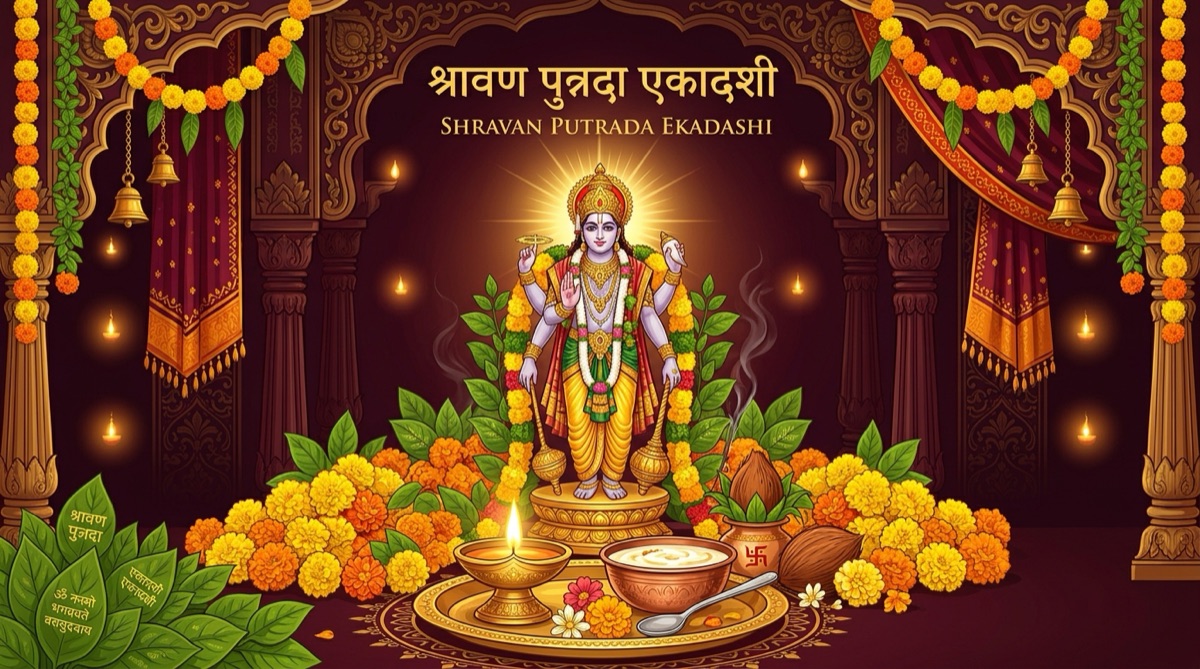
In the sacred calendar of the Hindu Panchang, every month features two Ekadashi days (the 11th lunar day of each fortnight). Among the 24 Ekadashis celebrated throughout the year, the Ekadashi occurring during the bright fortnight (Shukla Paksha) of the holy monsoon month of Shravan holds a deeply affectionate place.
It is called Shravan Putrada Ekadashi.
The word Putrada literally means "giver of children, lineage, and emotional fulfillment." While historically observed by couples praying for the gift of a healthy child or the protection of their children's well-being, the deeper Vedantic meaning of Putrada extends far beyond biological lineage. In spiritual philosophy, "child" also represents the fruits of your good deeds (Karma), the birth of positive ideas, and the preservation of peace within a family.
In 2026, Shravan Putrada Ekadashi will be celebrated on Monday, 24 August 2026 (falling on a highly auspicious Somvar during Shravan!).
Whether you are keeping this Ekadashi fast to seek blessings for your family, or looking to quiet your mind through a day of conscious satvik living, this guide will walk you through the fasting rules, the evening Vishnu puja, and the profound ancient legend behind the day.
The Core Meaning: Why Shravan Ekadashi is Extraordinarily Powerful
Every Ekadashi is dedicated to Lord Vishnu (the preserver of life). However, when Ekadashi falls during the month of Shravan—a month soaked in divine monsoon energy, fasting, and reflection—its spiritual benefits are amplified.
According to the Bhavishya Purana, observing Shravan Putrada Ekadashi clears deep-seated karmic blockages, restores harmony between parents and children, and instills a deep sense of contentment in the household.
The Vrat Katha: The Legend of King Suketuman and Queen Champaka
The story told on Shravan Putrada Ekadashi illustrates how sincere faith and ethical living can transform grief into joy.
Once, in the ancient kingdom of Bhadravati, ruled a wise and noble king named Suketuman and his virtuous queen, Champaka. Though the king ruled with justice and generosity, the couple carried a quiet, aching sorrow: they had no child to carry forward their family lineage. The king worried constantly about who would care for his kingdom and offer prayers for his ancestors after his death.
Overwhelmed by sadness, King Suketuman rode deep into the forest one afternoon. There, near a serene lake surrounded by lush trees, he encountered a group of enlightened sages (Rishis) sitting in quiet meditation.
The king bowed humbly and shared his grief. The sages smiled gently and informed him that today was the highly auspicious Shravan Shukla Ekadashi. They advised the king and queen to return to their palace, observe a strict, sincere Ekadashi fast dedicated to Lord Vishnu, and offer prayers with pure hearts.
Suketuman and Champaka followed the sages' guidance with absolute devotion. Within due time, the royal household was blessed with a wise, compassionate son who brought joy to the entire kingdom.
The moral of the katha is timeless: Despair loses its power when met with patient prayer, ethical conduct, and self-discipline.
Essential Ekadashi Fasting Rules (What to Eat & Avoid)
To gain the maximum physical and mental benefits of Ekadashi, traditional scripture outlines specific dietary rules:
Foods to STRICTLY AVOID on Ekadashi:
- Grains and Pulses: Rice, wheat, barley, lentils (dal), beans, and corn are completely avoided on Ekadashi. Ancient Ayurvedic texts state that grains absorb heavy atmospheric moisture on the 11th lunar day, making them harder to digest.
- Onions, Garlic, and Heavy Spices: Avoid tamasik ingredients that are traditionally considered heavy or agitating for the mind.
- Table Salt: Regular refined salt is avoided; rock salt (Sendha Namak) is used instead.
Allowed Satvik Foods (Phalahar):
- Fresh fruits (apples, bananas, pomegranates, melons, berries).
- Dairy products (pure milk, curd, paneer, ghee).
- Tapioca pearls (Sabudana), buckwheat flour (Kuttu), water chestnut flour (Singhara), and potatoes cooked simply in ghee with rock salt and cumin.
- Plenty of fresh water and coconut water to stay hydrated.
Step-by-Step Puja Vidhi for Shravan Putrada Ekadashi
- Morning Bath & Sankalpa: Wake up early during Brahma Muhurta. Take a bath, wear clean clothes, and sit before your altar. Take a quiet vow (Sankalpa): "Lord Vishnu, today I observe this Ekadashi fast with a clean heart for the peace and well-being of my family."
- Altar Setup: Place an image or idol of Lord Vishnu or Lord Krishna on a clean yellow cloth.
- Offerings: Offer fresh yellow flowers, Tulsi leaves (Tulsi Dal is essential for Vishnu puja), panchamrit (milk, curd, honey, sugar, ghee), sandalwood paste, and fruits.
- Chanting: Recite the Vishnu Sahasranama, Om Namo Bhagavate Vasudevaya (108 times), or chant Hare Krishna Mahamantra.
- Read the Katha: Read or listen to the Shravan Putrada Ekadashi Vrat Katha in the evening.
- Aarti & Prasad: Light a ghee lamp, perform aarti, and share fruit prasad with family members.
Parana Rules: How to Break the Fast Correctly
Breaking the Ekadashi fast the following morning is called Parana. Parana MUST be performed within the specific Parana Time Window on Dwadashi (the 12th lunar day), which is listed in your local Panchang.
- How to Break the Fast: After taking a bath and lighting a morning lamp to Lord Vishnu, break your fast by consuming a small sip of water containing a Tulsi leaf, or a bite of fruit/satvik food before eating a regular meal.
- Avoid Overeating: Do not rush into eating heavy, greasy food immediately after Parana. Keep your breakfast light and easy to digest.
Frequently asked questions
Why is Tulsi leaf mandatory for Vishnu Puja on Ekadashi? Goddess Tulsi is considered the dearest devotee of Lord Vishnu. Scripture states that Lord Vishnu does not accept food offerings (Naivedya) unless a sacred Tulsi leaf is placed upon them. However, remember never to pluck Tulsi leaves on the day of Ekadashi itself—pluck them the evening before!
Can pregnant women or elderly people keep Ekadashi? Pregnant women, nursing mothers, young children, and elderly people managing health conditions should NOT keep strict waterless or foodless fasts. They can observe a partial fast by eating fruits and milk while maintaining a calm, prayerful mindset.
What if I accidentally ate rice or grains on Ekadashi? Do not panic or feel consumed by guilt. Simply wash your hands and mouth, apologize sincerely in your heart to Lord Vishnu, take a sip of fresh water, and continue your day with mindfulness.
Related reading
Get today's Panchang for your city
See today's tithi, nakshatra, Rahu Kaal and shubh muhurat for your city with the free Naam Jaap Panchang.
Open the Panchang