
Hanuman Chalisa: Meaning, Benefits, and How to Recite It Daily
By Naam Jaap Editorial Team · July 6, 2026 · Reviewed July 22, 2026 · 7 min read
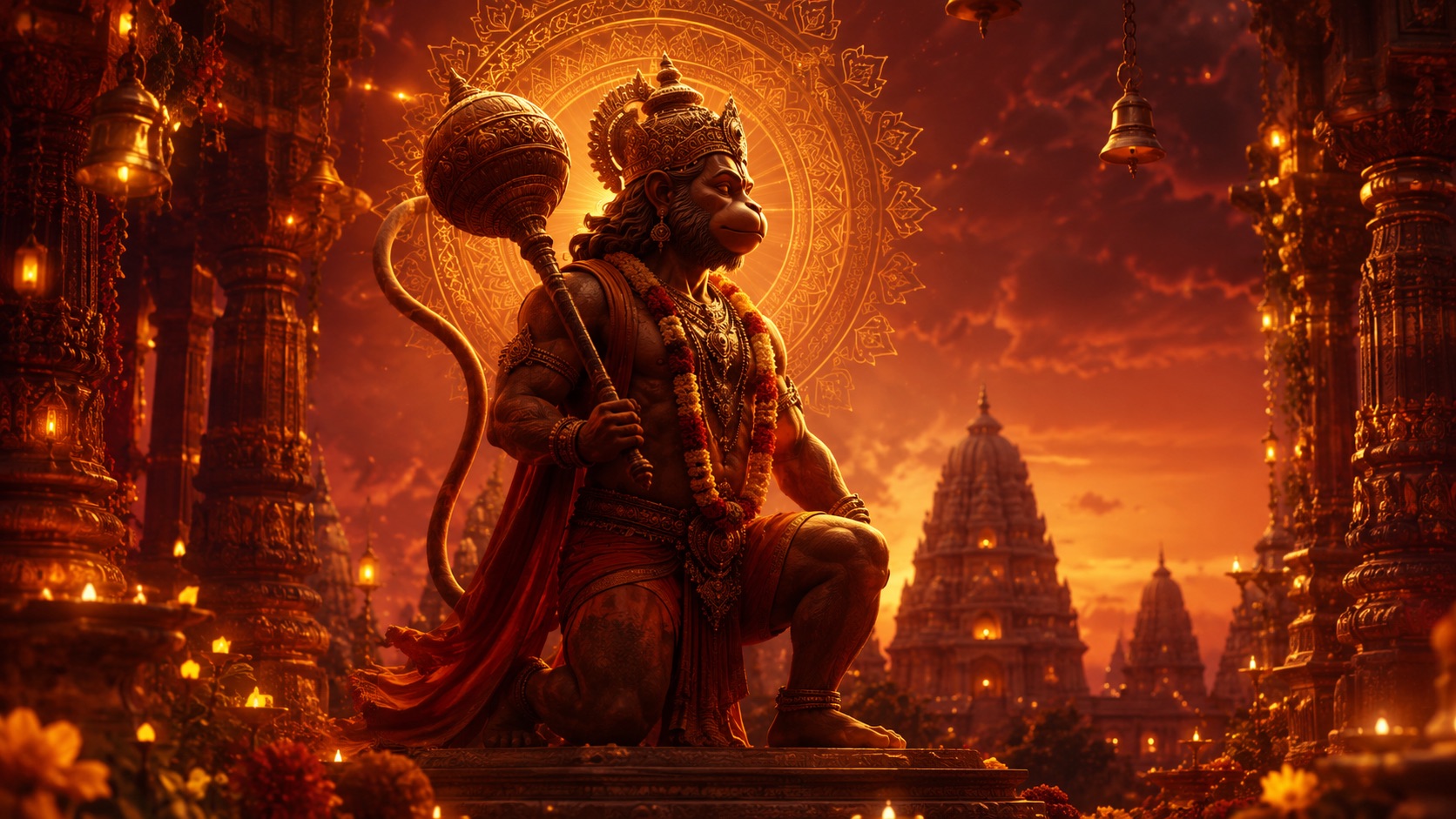
The Hanuman Chalisa is one of the most beloved and widely recited prayers in the Hindu tradition. Millions chant it daily — for courage, for calm, and to feel protected. This guide explains what it is, who wrote it, the meaning behind its most famous verses, and simple, practical ways to make it part of your daily practice.
What is the Hanuman Chalisa?
The Hanuman Chalisa is a 40-verse devotional hymn dedicated to Lord Hanuman, the devoted disciple of Sri Rama. The name comes from the Hindi word chalis, meaning forty — a reference to its forty main verses (chaupais).
It was composed by the revered poet-saint Goswami Tulsidas in the 16th century, written in the Awadhi language. Tulsidas is the same saint who wrote the Ramcharitmanas, the beloved retelling of the Ramayana.
The structure of the Chalisa
The hymn has a simple, memorable shape:
- 2 opening dohas (couplets) — a prayer to the Guru and to Hanuman
- 40 chaupais (four-line verses) — praising Hanuman's qualities and deeds
- 1 closing doha — a final request for Hanuman to dwell in the devotee's heart
The meaning of the key verses
You don't need to understand every word to benefit from the Chalisa, but knowing the meaning deepens the devotion. Here are its most well-known verses with their sense in English.
The opening prayer
Shri Guru Charan Saroj Raj, Nij Manu Mukuru Sudhari Baranau Raghubar Bimal Jasu, Jo Dayaku Phal Chari.
Cleansing the mirror of my mind with the dust of my Guru's lotus feet, I describe the pure glory of Sri Rama, which bestows the four fruits of life — righteousness, prosperity, desire, and liberation.
Buddhiheen Tanu Janike, Sumirau Pavan Kumar Bal Buddhi Vidya Dehu Mohi, Harahu Kalesa Bikaar.
Knowing myself to be without wisdom, I remember Hanuman, the son of the wind. Grant me strength, intelligence and knowledge, and remove my sorrows and shortcomings.
Verses in praise of Hanuman
Jai Hanuman Gyan Gun Sagar, Jai Kapis Tihun Lok Ujagar.
Victory to Hanuman, the ocean of wisdom and virtue; victory to the lord among the vanaras, who illumines all three worlds.
Ram Doot Atulit Bal Dhama, Anjani-putra Pavan Sut Nama.
You are the messenger of Rama and the abode of incomparable strength, known as the son of Anjani and the son of the wind.
The verses of protection
These are the lines many devotees hold closest:
Bhoot Pisaach Nikat Nahin Aavai, Mahabir Jab Naam Sunavai.
Evil spirits and negativity do not come near when one utters the name of the mighty hero, Hanuman.
Nasai Rog Harai Sab Peera, Japat Nirantar Hanumat Beera.
Disease is destroyed and all pain is removed for those who chant the name of the brave Hanuman continuously.
The closing prayer
Pavan Tanay Sankat Haran, Mangal Murati Roop Ram Lakhan Sita Sahit, Hriday Basahu Sur Bhoop.
O son of the wind, remover of hardships, embodiment of auspiciousness — reside in my heart together with Rama, Lakshmana and Sita, O king among the divine.
Verses to turn to in fear or anxiety
The whole Chalisa takes only seven or eight minutes to recite, but in a difficult season a few verses are worth pausing on. Tulsidas is said to have composed it from a prison cell — devotion opening an inner door when the outer ones were locked. These are the lines many devotees return to when the mind is heavy:
For fear and worry — “Sab Sukh Lahai Tumhari Sarana, Tum Rakshak Kahu Ko Darna.” “All comfort is found in your refuge; with you as protector, what is there to fear?” A quiet reminder that you do not face things entirely alone.
For illness and exhaustion — “Nasai Rog Harai Sab Peera, Japat Nirantar Hanumat Beera.” “Sickness and pain ease for one who steadily remembers the brave Hanuman.” Traditionally recited for strength through fatigue and recovery — a support alongside proper medical care, never a replacement for it.
For tasks that feel impossible — “Durgam Kaj Jagat Ke Jete, Sugam Anugraha Tumhre Tete.” “The hardest tasks in the world become easy by your grace.” Useful when a decision or deadline feels paralysing and you simply need the courage for the first step.
For intrusive, fearful thoughts — “Bhoot Pisach Nikat Nahi Aavai, Mahabir Jab Naam Sunavai.” “No dark force comes near where the mighty one’s name is heard.” In everyday terms, the “phantoms” this clears are often our own intrusive thoughts, self-doubt and looping worries.
None of this is a promise that troubles vanish. It is that turning the mind, again and again, toward courage and refuge slowly changes how we meet them.
The benefits of reciting the Hanuman Chalisa
In the devotional tradition, the Hanuman Chalisa is believed to bring:
- Courage and inner strength in the face of fear or difficulty
- Relief from troubles (sankat) — Hanuman is called Sankat Mochan, "remover of hardships"
- A calmer, more focused mind, especially when recited slowly with attention
- A sense of protection and steadiness during stressful times
- Devotional discipline — a small, repeatable practice that anchors the day
It's worth holding these gently: the Chalisa is a prayer, not a transaction. Its deepest gift is the calm, faith and focus that come from sincere, regular recitation.
When and how to recite it
There are no rigid rules, but here is the common guidance:
- Best days: Tuesday and Saturday are traditionally associated with Hanuman, though daily recitation is welcome.
- Best time: Early morning after bathing, or in the evening. A quiet, clean space and a steady posture help.
- How many times: Once is complete in itself. Some devotees recite it 7 or 11 times; others keep a fixed daily count.
- How to chant: Slowly and clearly, with attention to the meaning where you can. Consistency matters more than speed.
Keeping a 40-day sadhana
A sadhana is a committed spiritual practice done regularly over a set period. A popular way to deepen your connection with the Chalisa is a 40-day sadhana — reciting it every day for forty consecutive days.
Forty days is long enough to build a genuine habit and short enough to stay committed. The key is not missing a day — even a single quiet recitation keeps the thread unbroken. Tracking your streak and daily count makes this far easier to sustain.
Frequently asked questions
Who wrote the Hanuman Chalisa?
It was composed by Goswami Tulsidas, the 16th-century poet-saint who also wrote the Ramcharitmanas, in the Awadhi language.
How many verses are in the Hanuman Chalisa?
It has 40 main verses (chaupais), framed by two opening dohas and one closing doha.
Can I recite the Hanuman Chalisa every day?
Yes. Daily recitation is encouraged, with Tuesday and Saturday considered especially auspicious.
Do I need to understand the meaning for it to "work"?
No — sincere recitation is valued in itself. But understanding the meaning naturally deepens your devotion and focus.
Keep a Hanuman Chalisa sadhana
Read the Chalisa, track each recitation and complete a 40-day sadhana with the free app.
Get it on Google Play