
Likhit Japa (Writing Mantras): The Quiet Power of Writing Divine Names for Peace
By Naam Jaap Editorial Team · July 22, 2026 · Reviewed August 11, 2026 · 5 min read
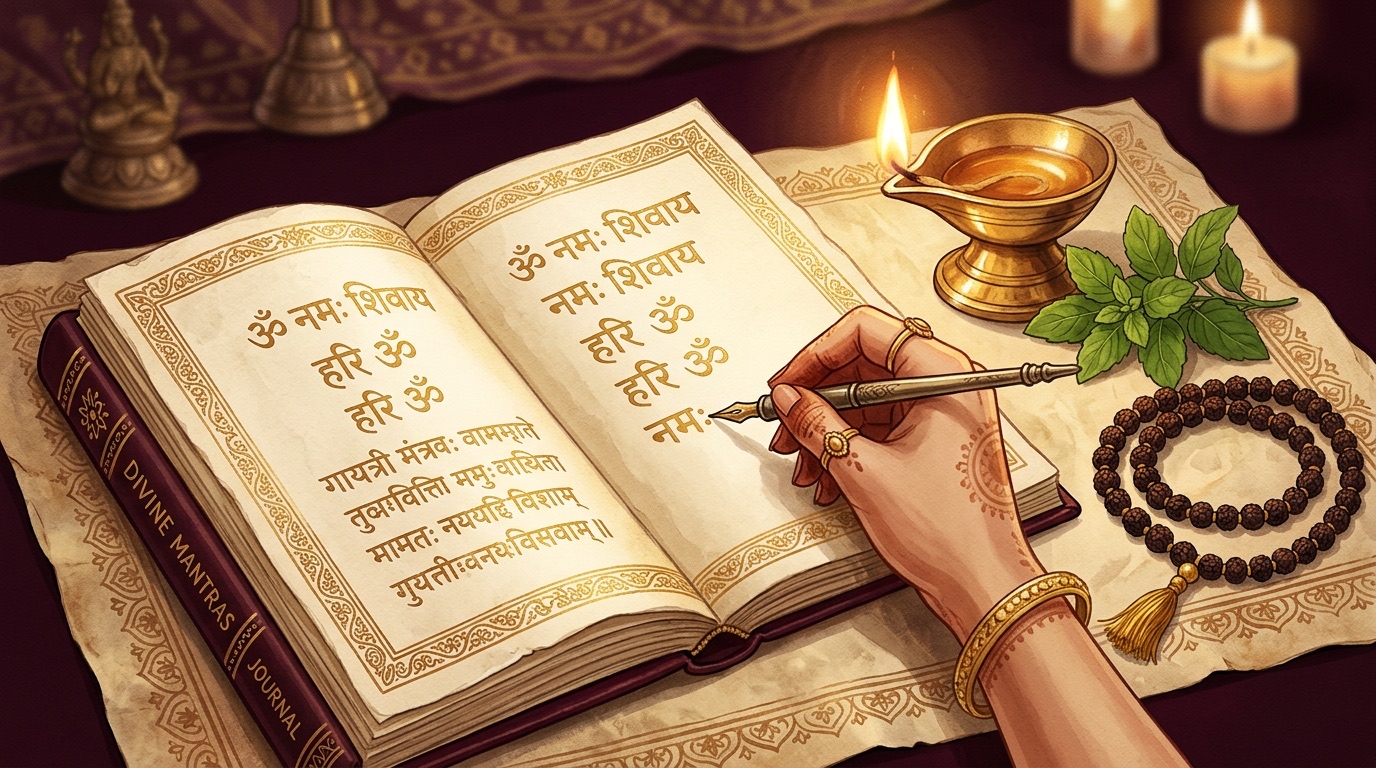
Imagine sitting at your desk after a noisy, scattered day. You open a clean notebook kept only for this, pick up a pen, and quietly write a single sacred name — Ram, Om Namah Shivaya, Radhe Radhe, Om — line by line, page by page. Within a few minutes the racing thoughts begin to settle, the breath slows, and the pull to check your phone quietly fades. This is Likhit Japa: the practice of writing a divine name or mantra repeatedly, with full attention, in a book kept for that purpose alone.
Alongside spoken chanting (vachik) and silent mental chanting (manasik) — which we cover in our guide to the three types of japa — Likhit Japa is often the most accessible and forgiving form for a modern, restless mind. It asks for no Sanskrit accent and no training. Anyone who can hold a pen can begin today.
Why writing settles the mind
Why does writing a name steady the attention more easily than repeating it in the head? Because writing by hand engages three channels at once — the movement of the hand forming each letter, the sight of the letters appearing on the page, and the inner sound of the mantra as you write it. With all three occupied by the same word, there is simply very little room left for the mind to wander. If you try to worry about work or bills while carefully writing "Ram", you will notice your hand slows or stops. The practice gently pulls you into the present without any struggle.
What devotees value in Likhit Japa
Swami Sivananda of Rishikesh wrote often about Likhit Japa and recommended it warmly. A few of its gifts:
- Steadier focus. Where the mind can quietly slip away during silent japa, writing keeps body and mind aligned on the same word.
- Patience and discipline. Slowly filling a notebook with neat, even writing builds real willpower and calm.
- A sacred keepsake. A completed notebook of divine names is treated as a sacred object, kept with the family's scriptures.
- Open to everyone. No pronunciation worries, no vocal strain, no prerequisites — only a pen, a page and sincerity.
How to start your own Likhit Japa practice
1. Choose one name
Pick a single mantra or name that your heart takes to — Ram or Sri Ram, Om Namah Shivaya, Radhe Radhe, Hare Krishna, Om, or the Gayatri Mantra. Once you choose it for a notebook, stay with the same name until that book is full; avoid switching midway.
2. Keep a dedicated notebook
Reserve a clean notebook only for this — not for lists or work notes — and keep a comfortable pen with it.
3. Set a small daily quota
Decide by count (say one mala of 108, or 216) or by time (a 15-minute timer, writing gently until it rings). Small and steady beats large and occasional.
4. Write mindfully
Sit with an easy, straight spine. Before the first word, close the eyes, take three slow breaths, and offer a short prayer — "May this writing bring peace and devotion to my heart." As you form each letter, sound the name silently in your mind, writing evenly, as if carving the name into a temple wall.
If you already chant, this pairs beautifully with a mala practice or with Ram naam jaap — write for a while, then close the eyes and simply repeat the name.
Caring for a completed notebook
Because the book holds thousands of divine names written with love, it is treated with respect:
- Keep it clean — on your altar, near your scriptures, or in a cloth pouch; not on the bare floor.
- When a notebook is full, you can preserve it at home as a family keepsake; or, if space is short, notebooks of natural paper and simple ink can be respectfully immersed in clean flowing water or placed near the roots of a sacred tree.
- Some pilgrimage centres in Ayodhya, Vrindavan and Varanasi keep Ram Naam repositories where written notebooks are received and preserved.
A quiet practice for anxious times
What makes Likhit Japa so suited to now is that it turns a wandering, over-stimulated mind toward one still point — without demanding silence, skill or a perfect setting. On a hard day, ten minutes of writing a name you love can do what forcing yourself to "just relax" cannot. Start one page today; let the notebook fill itself, one calm line at a time.
Related reading
- What is Naam Jaap? A beginner's guide
- Manasik, Upanshu and Vachik japa explained
- Ram Naam Jaap: the power of chanting Ram
- Count your japa with the free Naam Jaap app
Count your japa with Naam Jaap
Chant and track your rounds and daily goal with the free Naam Jaap app.
Open Naam Jaap